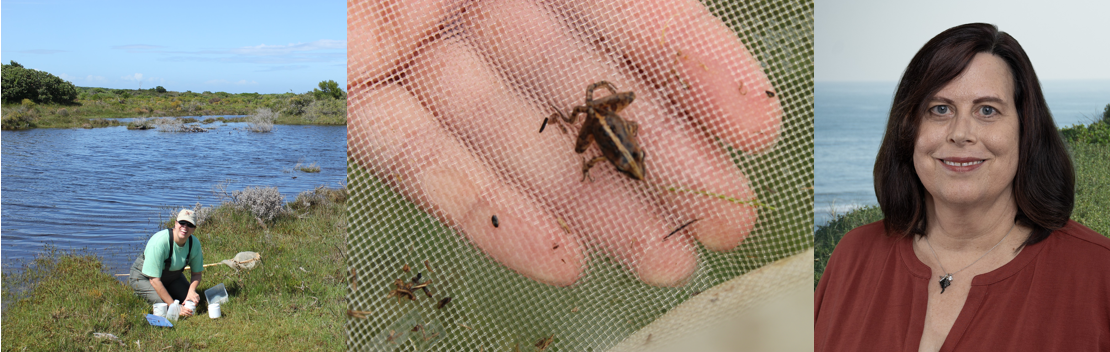
As part of the NRF-SAIAB’s Indigenous Marine Innovations for Sustainable Environments and Economies (IMIsEE) project, two PhD candidates are advancing research that meaningfully bridges Indigenous knowledge, ecological science, and coastal innovation. Vuyolwethu Mxo is a PhD candidate registered at Nelson Mandela University and affiliated with the Coastal and Ocean Sciences Team (COST) based at NRF-SAIAB. Jessica Allen is a visiting PhD candidate from the University of Plymouth, collaborating with the COST team at NRF-SAIAB as part of the IMIsEE initiative. While their projects focus on different aspects of sustainability, they share a common goal of strengthening the relationship between people, biodiversity, and coastal infrastructure.
Jessica Allen’s PhD explores how we can make “grey” coastal infrastructure greener. Around the world, structures such as seawalls and groynes are built to protect shorelines, but they are often smooth, flat surfaces that offer little space for marine life to settle and thrive. Jessica’s work asks a simple but powerful question: can we redesign these human-made structures so they work not only for people, but also for nature? As part of her PhD at the University of Plymouth, and in collaboration with the Coastal and Ocean Sciences Team at NRF-SAIAB, she tested whether a nature-based solution using imizi (Cyperus textilis), a wetland plant traditionally harvested and woven in South Africa, could serve as a nature-based ecological enhancement.
Working in collaboration with members of the Keiskamma Trust, who harvested, dried, and hand-braided the fibres using indigenous techniques, the team wrapped concrete tiles with ropes made from imizi. These tiles were then deployed off pontoons at the Port of Port Elizabeth to see how marine organisms would respond. The early findings are promising. Tiles wrapped in natural fibres supported higher numbers of young mussels than bare concrete tiles. Mussels are ecosystem engineers: they help clean water by filtering it while feeding and create living spaces for other organisms. Encouraging their settlement on artificial structures can therefore help transform hard, lifeless surfaces in healthier and more functional marine habitats. This research underscores how low-impact, locally sourced, and culturally rooted solutions can complement conventional hard-engineering approaches. By transdisciplinarily combining indigenous knowledge, community collaboration, and ecological science, it points toward more inclusive and environmentally sensitive ways of designing coastlines.
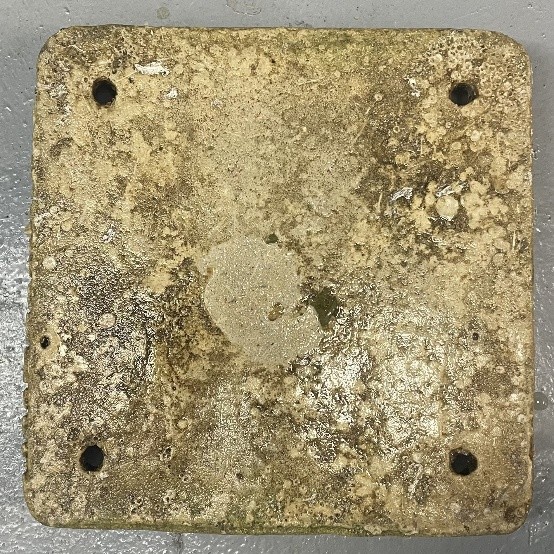
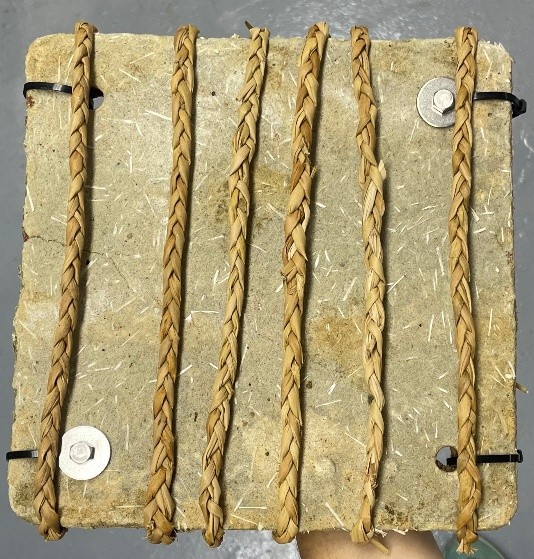
LEFT: Plain tile. RIGHT: A tile with ropes woven from the Imizi plant.
Vuyolwethu Mxo’s PhD centres on the sustainability of the use of the imizi plant and explored an important question: how can we use imizi (Cyperus textilis) in ways that protect both nature and culture? In many parts of southern South Africa, this plant holds deep cultural and economic importance, traditionally woven into mats and baskets for household use and ceremonial purposes. This tradition supports rural livelihoods and preserves generational knowledge.
As demand for imizi grows, both for traditional craftwork and for innovative coastal restoration initiatives there is increasing concern about pressure on wild populations. Vuyolwethu’s research examined the plant’s ecology in the wild, tested cultivation methods, and worked closely with indigenous knowledge holders to document traditional harvesting practices. Through engagement with communities in the Eastern Cape Province, Hamburg, and in Amadiba, near Bizana, the study identified complementary models of sustainability: one grounded in adaptive cultivation and ecological management to reduce pressure on natural populations, and another rooted in cultural values, respect and minimal disturbance, guided by customary practices and sacred relationships with the land. Together, these approaches demonstrate how cultural values and Indigenous Knowledge Systems actively contribute to biodiversity protection and community resilience.
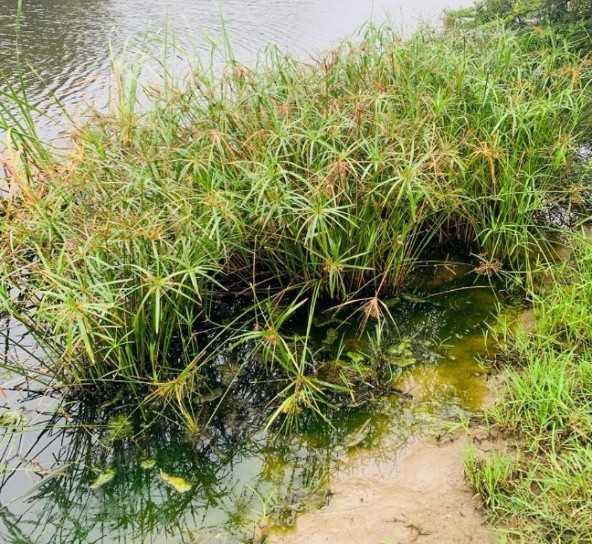
LEFT: Imizi plant (Cyperus textilis). RIGHT: A mat woven from imizi.
Central to both projects lies the question: ‘why does this work matter?’ Ecologically, the research supports biodiversity conservation, habitat rehabilitation, and rethinking how we manage our coastlines. By combining natural materials, ecological science, and local knowledge, these projects explore new ways of making coastal protection more environmentally sensitive and resilient. But the significance of this work goes beyond ecology. Socially and ethically, investigations as such underscore the importance of reciprocity, recognition, and long-term partnership.
The IMIsEE Project principal investigator, Prof. Francesca Porri, explained: “As traditional weaving techniques become increasingly integrated into eco-engineering and restoration initiatives, issues of knowledge ownership, fair benefit sharing, and biocultural rights become critical. Ensuring that local knowledge holders are genuinely recognised and acknowledged as collaborators and co-creators, rather than simply contributors of materials and techniques – strengthens both the integrity and impact of the research.”
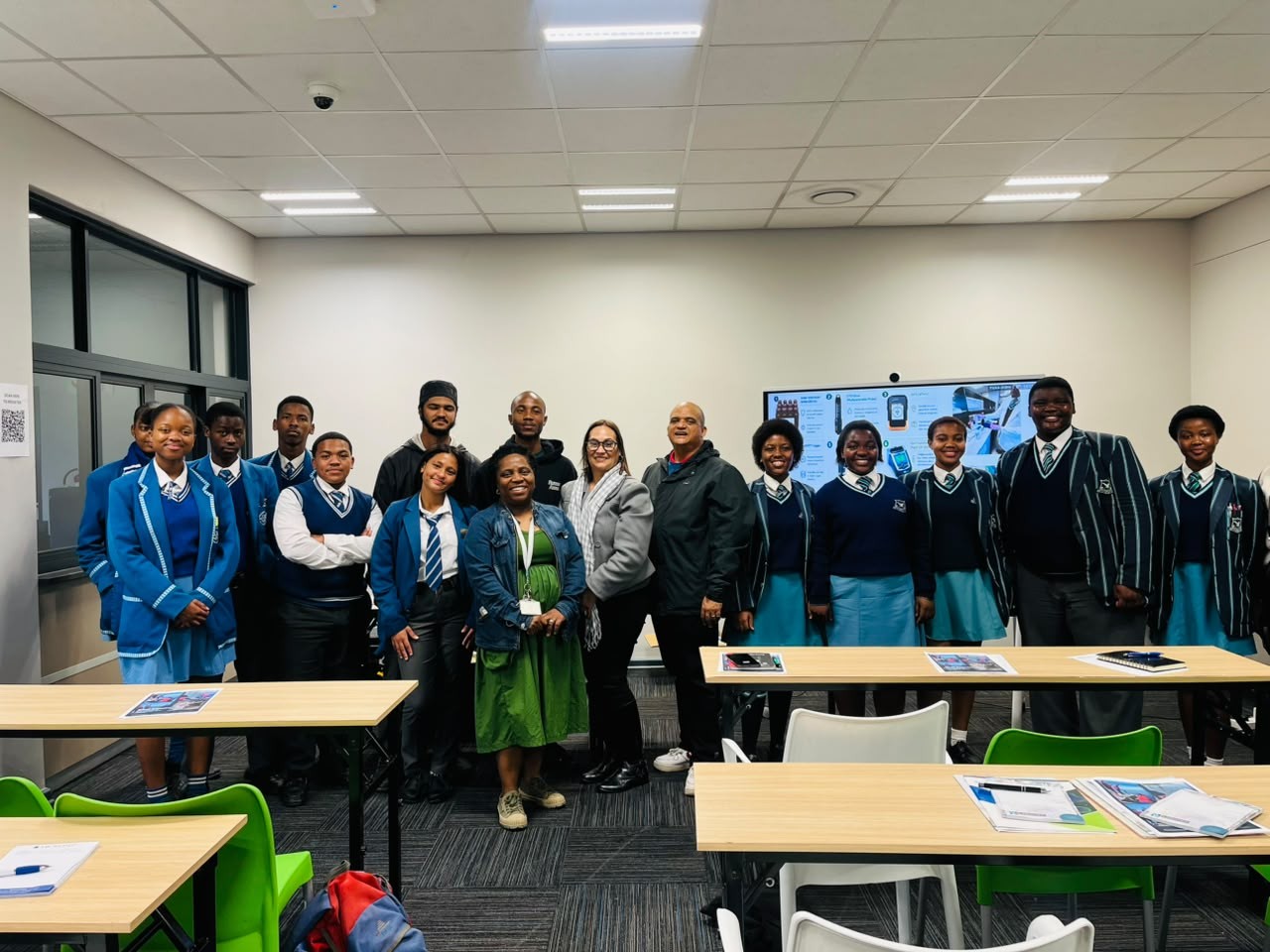
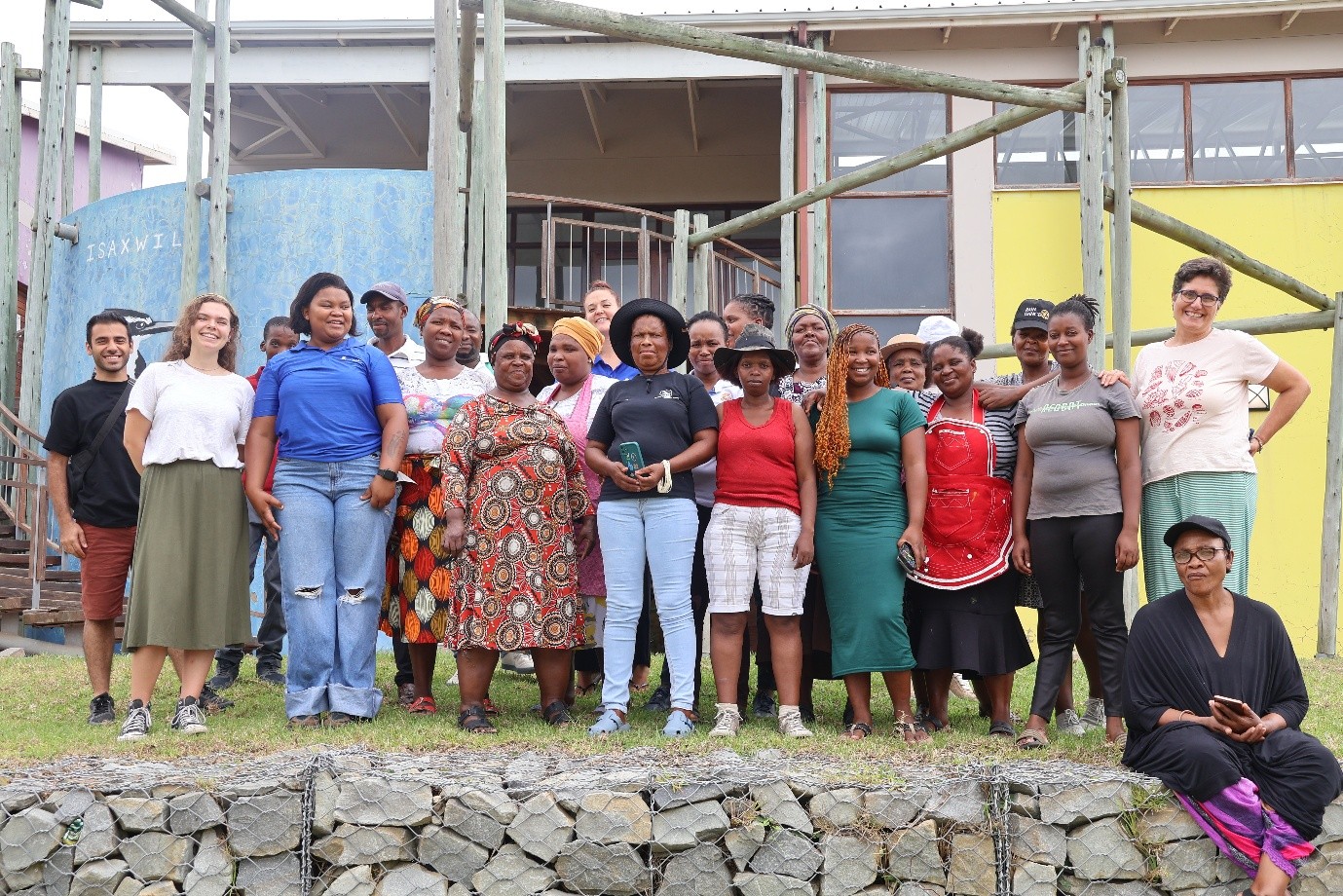
On 10 February 2026, Vuyo and Jessica returned to the Hamburg community to share the progress of their research. Rather than research being a one-way process, this visit created space for dialogue – allowing community members to hear how their knowledge and contributions are shaping the work, and to share their own reflections in return. By coming back to present their findings to participating communities, they reinforced the importance of transparency, mutual learning, and sustained responsible long-term engagement. Such moments of feedback are essential in building trust and ensuring that research relationships are sustained beyond data collection.
Their work demonstrates that environmental innovation is strongest when scientific research is conducted alongside – and informed by – Indigenous knowledge, cultural practice, and meaningful collaboration.