By Cornel-Mari du Preez, Dr Vuyolwethu Mxo, Dr Suzanne Redelighuys & Prof. Francesca Porri
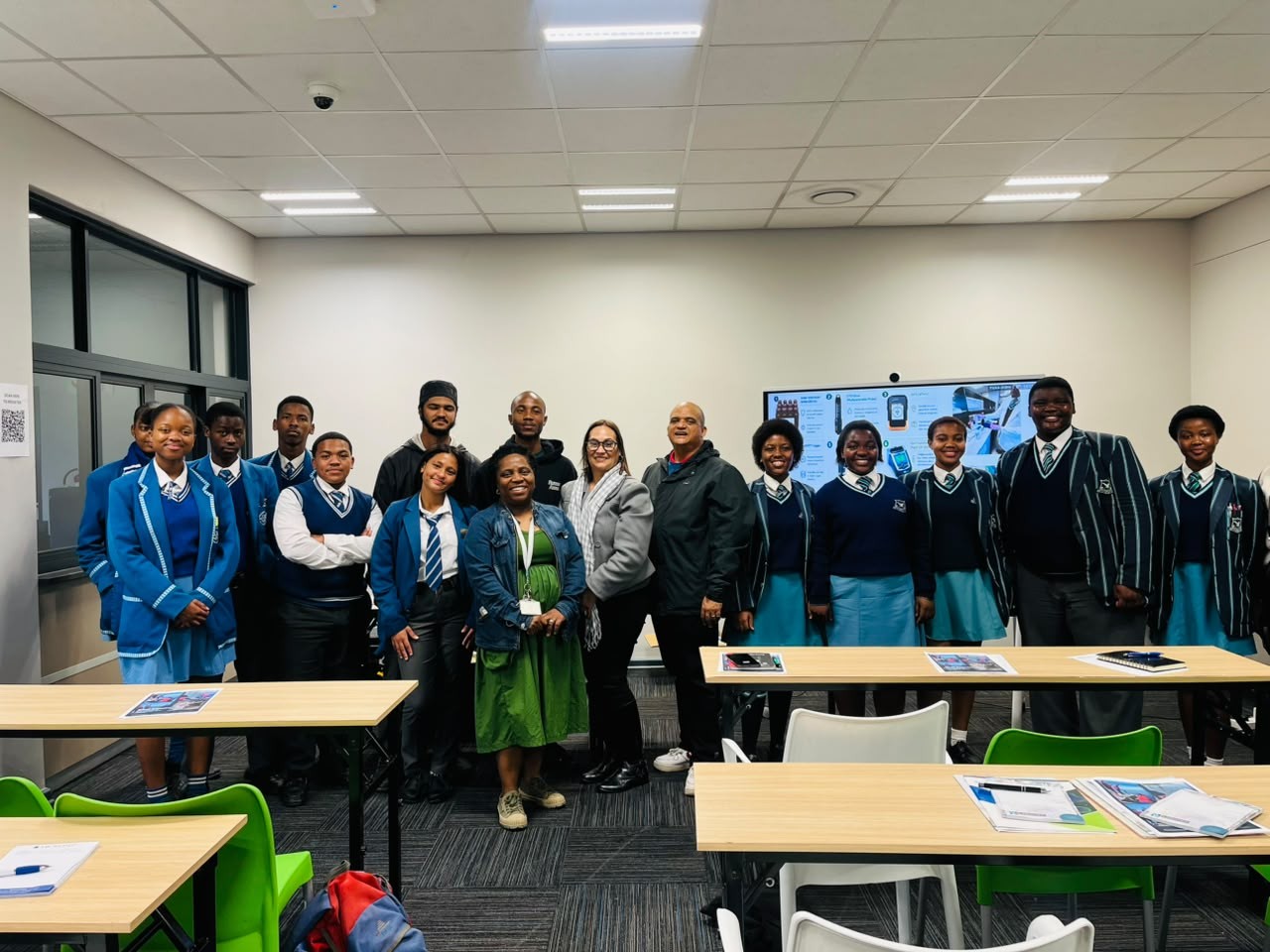
On 1 April 2026, NRF-SAIAB’s Coastal and Ocean Sciences Team (COST) welcomed a group of 23 Grade 10–11 learners at its Makhanda office for an engaging science outreach visit aimed at sparking interest in marine science and coastal innovation. The outreach formed part of COST’s ongoing commitment to science engagement, aimed at inspiring the next generation of ocean stewards through experiential learning and innovative approaches to coastal sustainability. The morning began with a welcome by NRF-SAIAB’s Senior Scientist, Professor Francesca Porri, who introduced learners to the importance of ocean research and its role in addressing real-world environmental challenges. The group was then divided into two teams to participate in interactive, hands-on activities led by COST members, Dr Suzanne Redelinghuys, Dr Vuyo Mxo and Cornel-Mari du Preez.
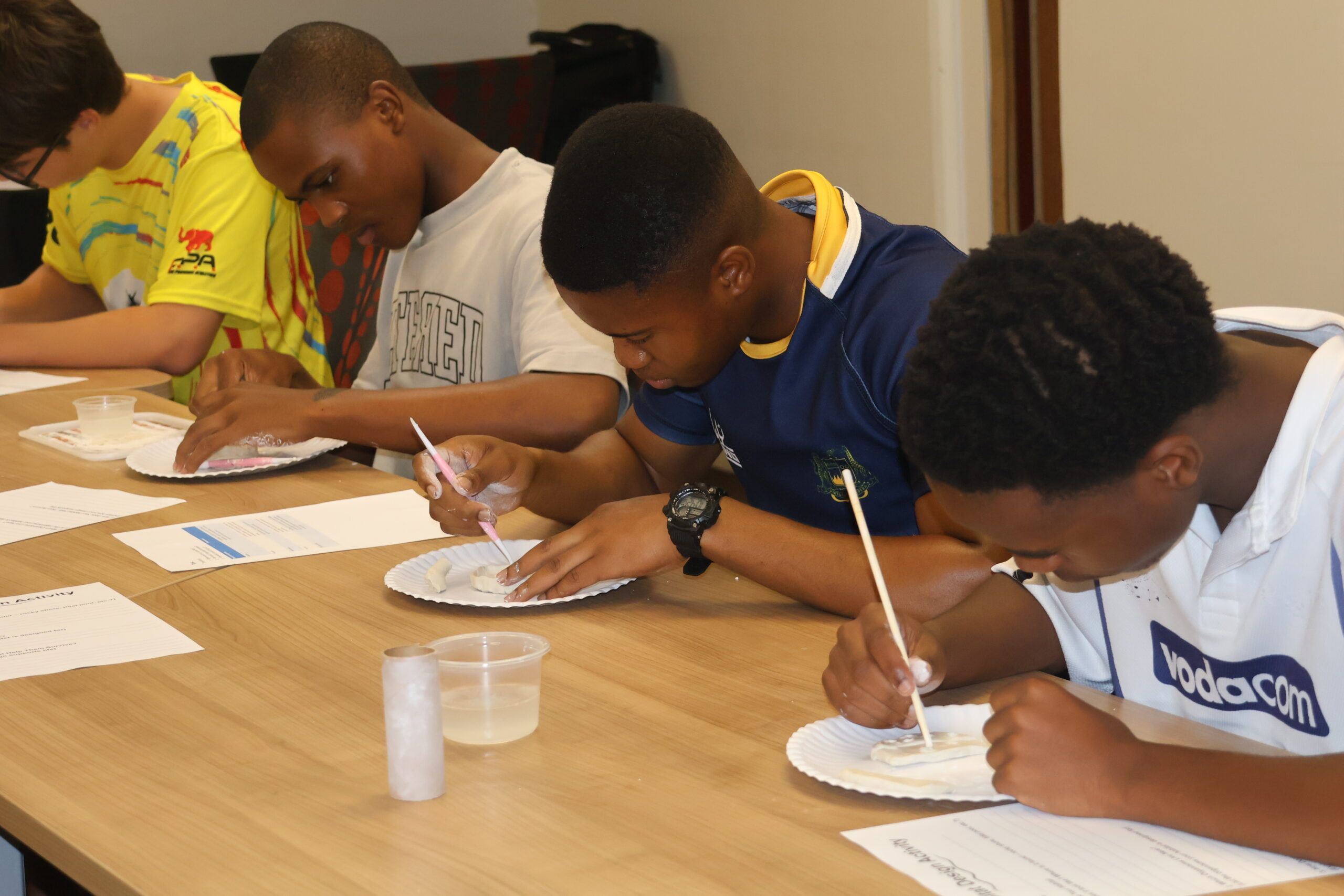
The first session was facilitated by NRF-SAIAB PhD student, Cornel-Mari du Preez, who introduced learners to the concept of ecological engineering in coastal environments. This activity highlighted the limitations of traditional grey coastal infrastructure and encouraged learners to think about sustainable alternatives, such as the Australian Living Seawalls initiative (https://www.livingseawalls.com.au/). By designing and building their own miniature seawall panels using clay, learners applied these concepts in practice. This creative exercise challenged learners to consider how habitat design can enhance biodiversity. Each learner named their structure and completed a short questionnaire reflecting on how their design would support marine life, identifying the types of organisms they expected to colonise their structures.
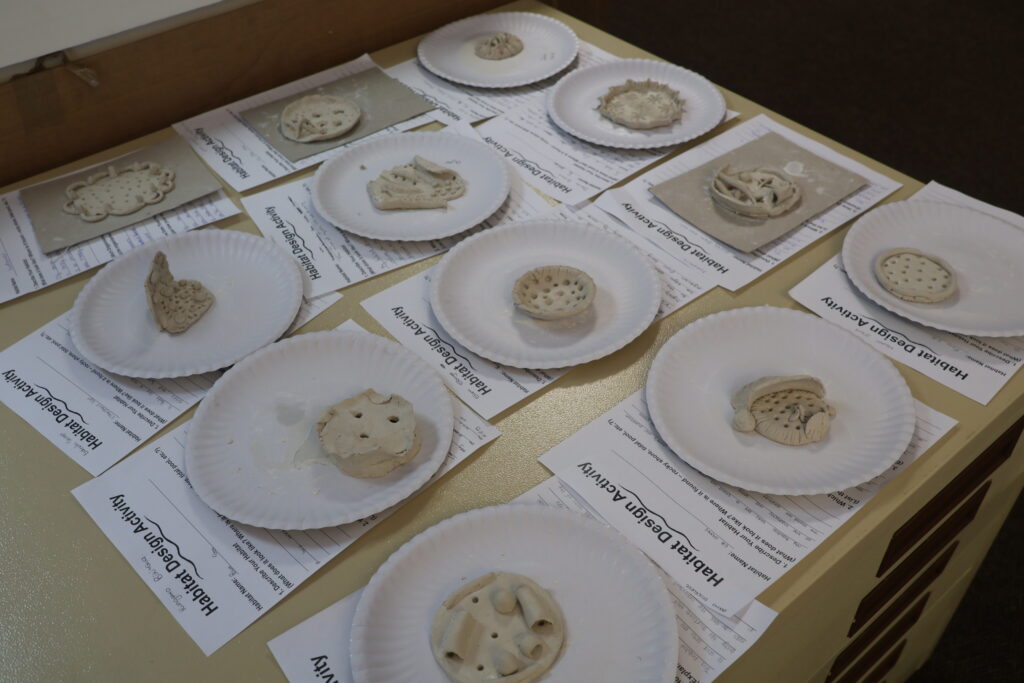
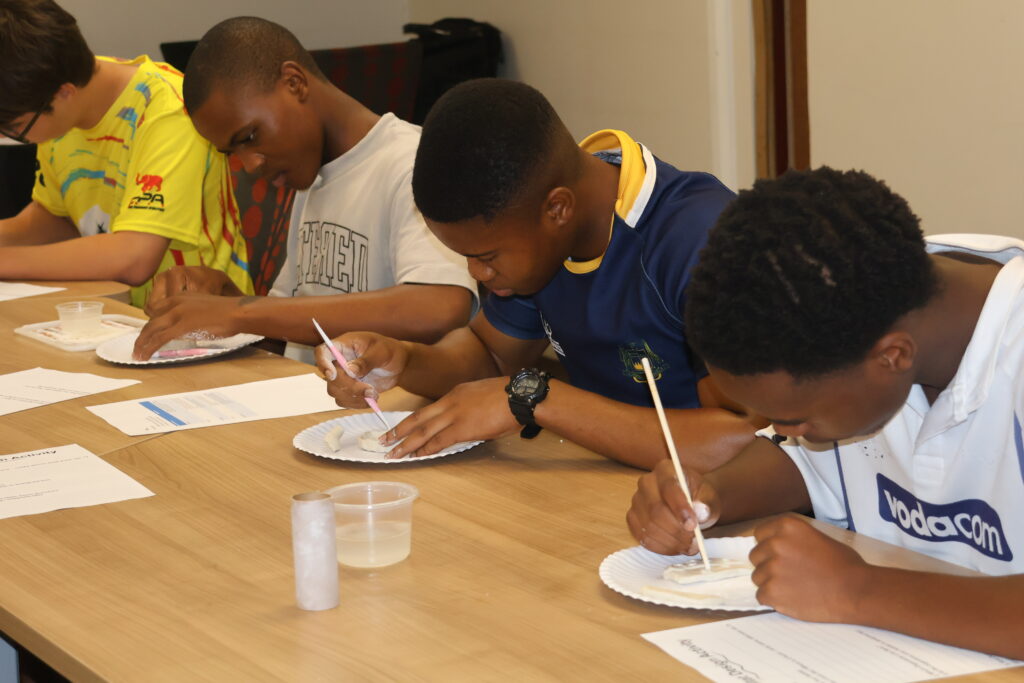
On the left, clay panels created by the learners; on the right, students actively engaged in creating their own panels.
The second activity, facilitated by NRF-SAIAB researcher Dr Redelinghuys, introduced learners to the dynamic world of rocky shore ecosystems, with a particular focus on molluscs and their shells. Through hands-on exploration, learners engaged with the diversity of marine organisms and examined the unique adaptations and morphological features that enable survival in these dynamic coastal environments.
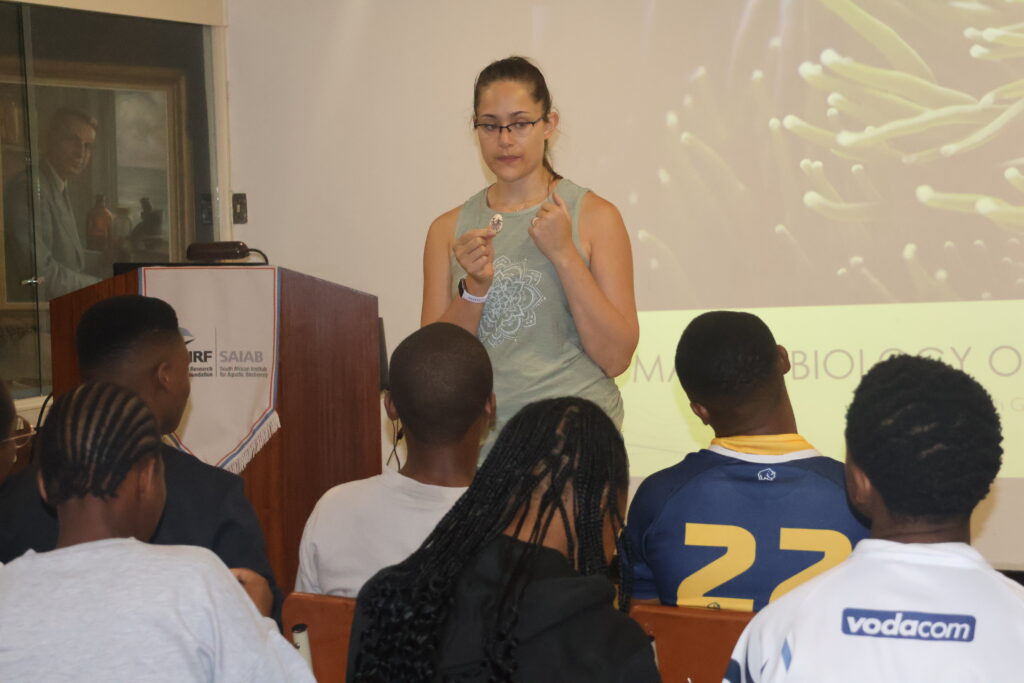
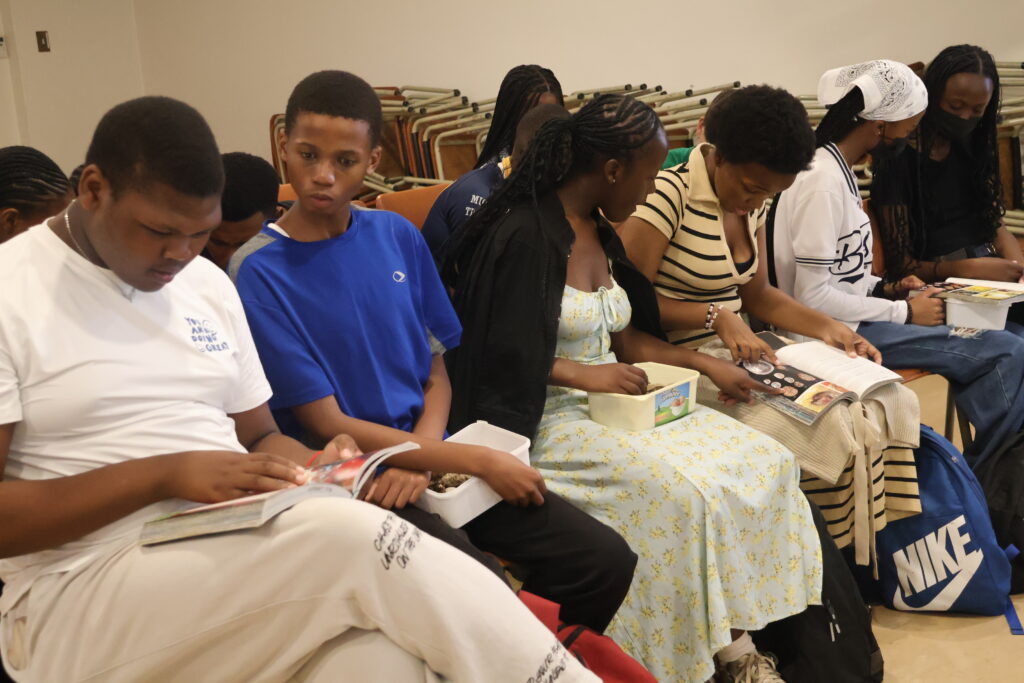
On the left, learners are being taught about marine organisms; on the right, students are examining different shells.
Following a short tea break, learners shifted from observation to innovation in a collaborative session led by Dr Mxo. Working in groups, learners developed basic project proposals by identifying an environmental problem, defining a clear aim, outlining required resources, considering budget allocation and describing the anticipated impact of their projects. This exercise offered valuable insight into how scientific research is conceptualised, structured, and funded.
The learners excelled in all activities, demonstrating enthusiasm, creativity and a strong willingness to learn. Their engagement reflected both curiosity and a growing awareness of the role science can play in addressing real-world environmental challenges. Through initiatives like this, COST continues to inspire the next generation of marine scientists and practitioners while contributing to broader efforts to advance innovative solutions such as Living Seawalls in Africa.