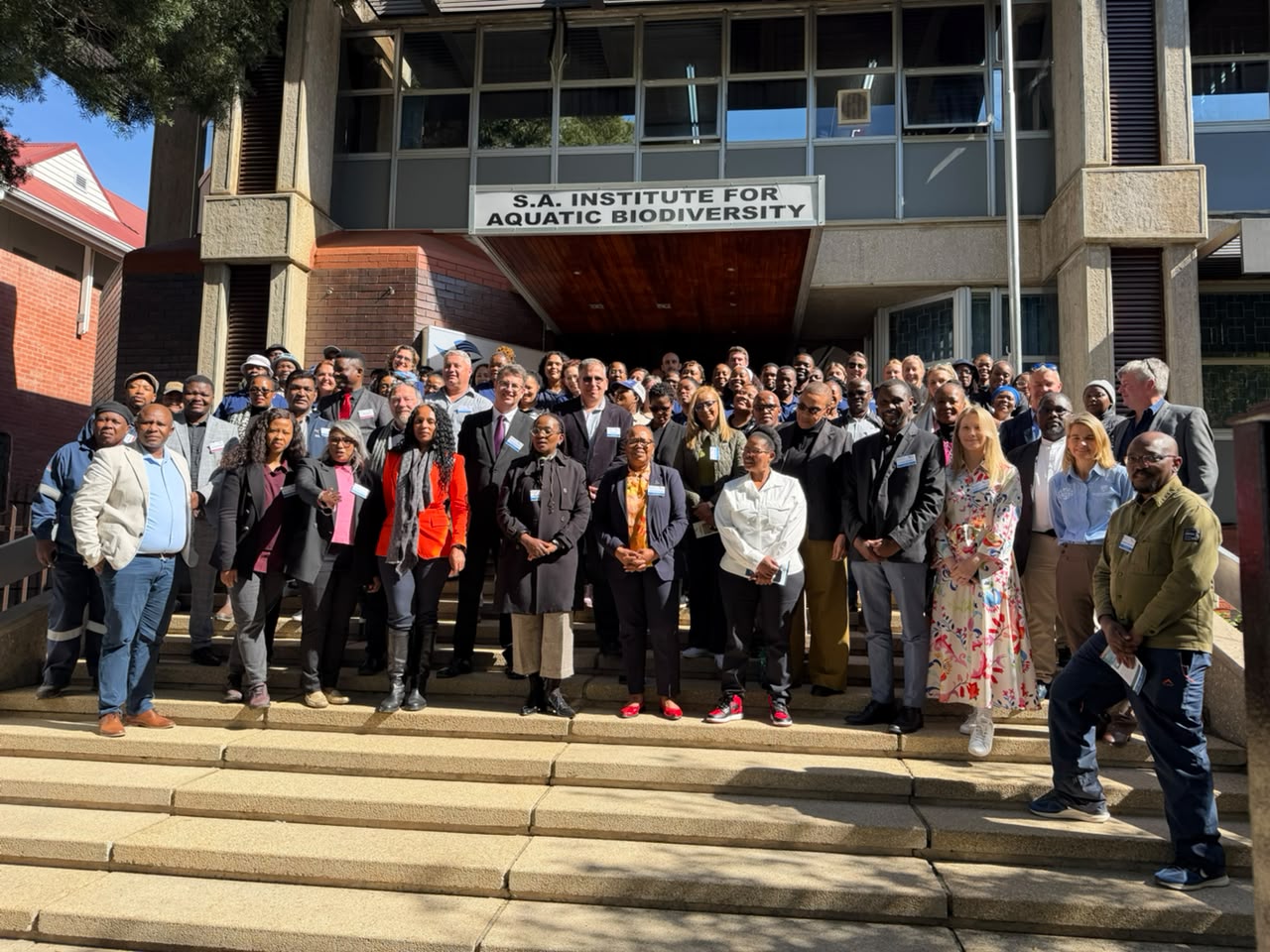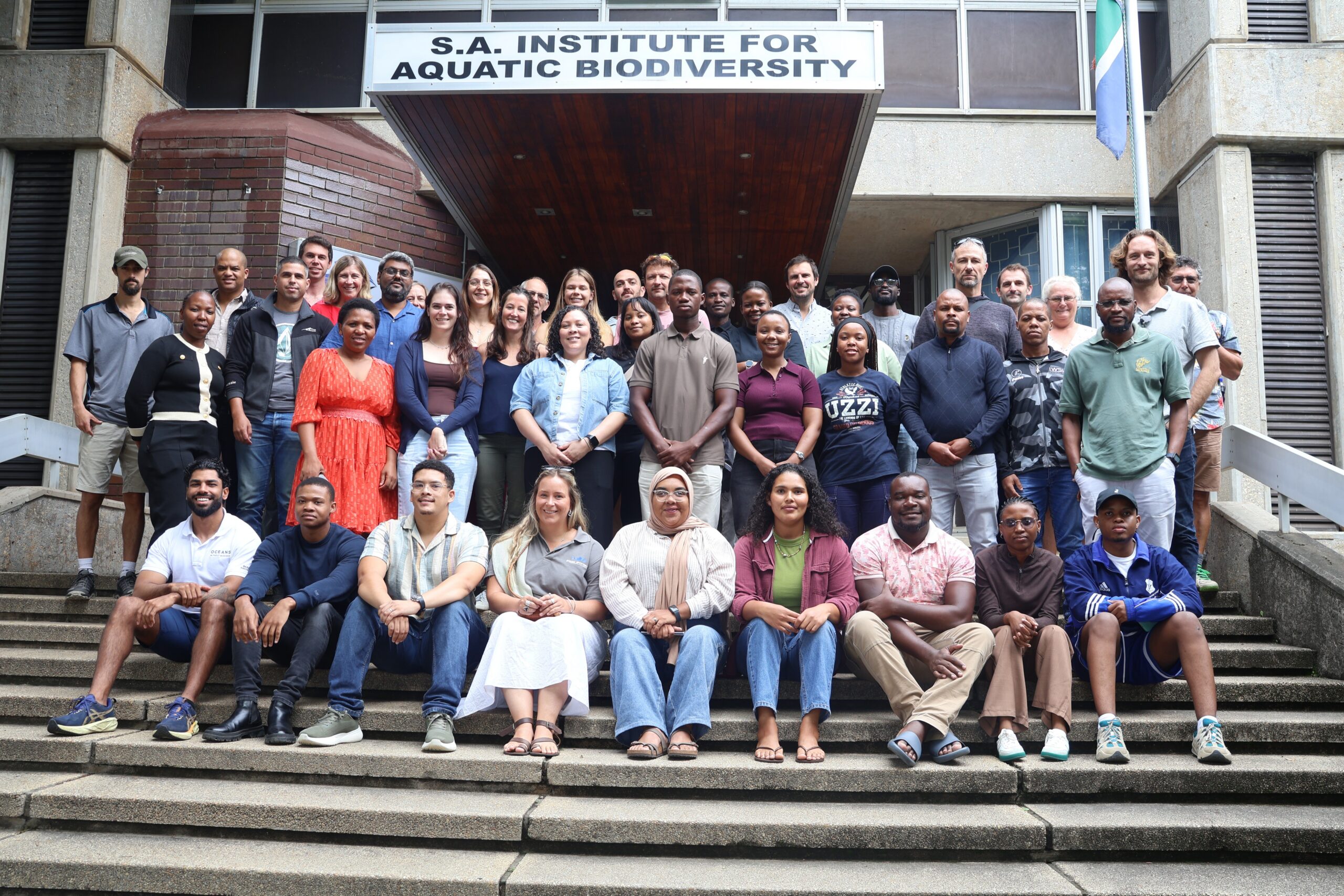
From 5 to 6 March 2026, NRF-SAIAB saw a total of 43 researchers, marine managers, students and collaborators working with Baited Remote Underwater Video systems (BRUVs) coming together for the SA BRUVs Network Meeting, a gathering that was aimed at strengthening how BRUVs data are collected, managed and used. The two-day meeting hosted by NRF-SAIAB in Makhanda, focused on refining standardised protocols, practical training, artificial intelligence (AI), data governance, stakeholder needs and identifying gaps in sampling coverage so that BRUVs data can better inform policy and support marine management across the continent.
“How can a growing network of people and institutions work better together so that underwater video data can become more useful, more comparable and more impactful?”, this was a simple but important question that was at the heart of the meeting. According to one of the organisers Dr Kaylee Smit, NRF-SAIAB’s Postdoctoral Research Fellow, “The primary goal of the meeting was to strengthen the SA BRUVs community – to improve coordination, standardisation, interoperability, and data collation across the network.” Kaylee explained that the meeting also formally introduced the new three-year FBIP-funded MobiFish project, while creating space for training, data and metadata collection, and deeper conversations around stakeholder needs and research gaps.
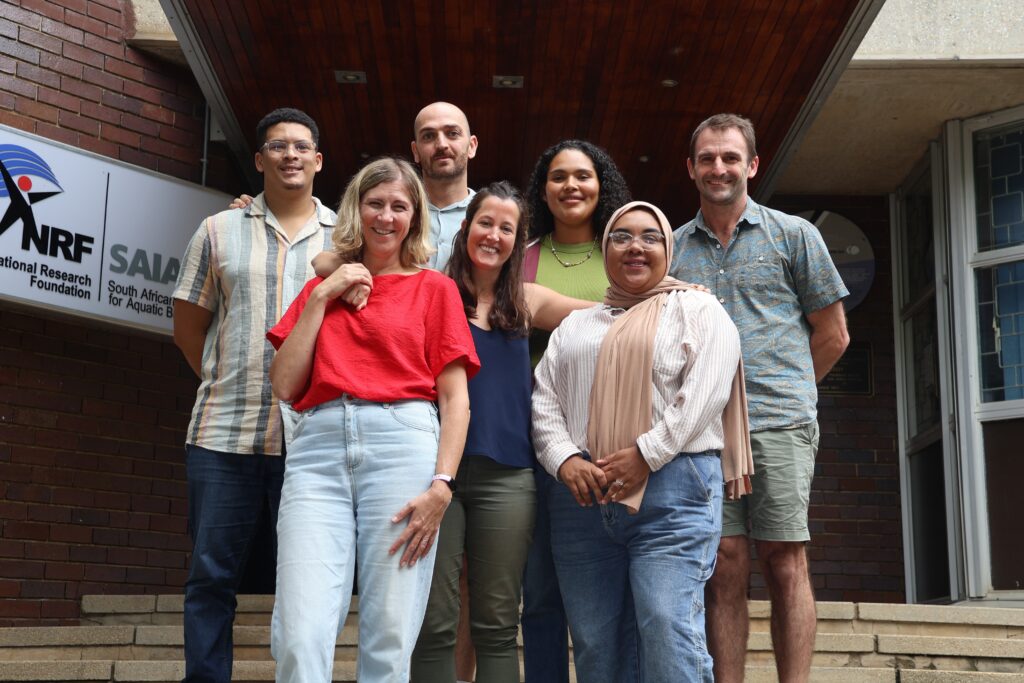
The organising committee of the SA BRUVs Network Meeting. FRONT ROW, FROM LEFT TO RIGHT: Dr Elodie Heyns-Veale, Dr Kaylee Smit & Aseeqah Davids. BACK ROW, FROM LEFT TO RIGHT: Luther Adams, Angus van Wyk, Danielle Julius & Dr Anthony Bernard.
The workshop programme included sessions that covered the MobiFish project, Auto Mean Count for artificial intelligence (AI) development, existing data and gap analysis, priority species, data management needs, data governance and stakeholder needs. Parallel training sessions also gave attendees hands-on exposure to equipment setup, calibration, field data management, fish identification and quality control processes. Together, these discussions and practical sessions showed that the meeting was not only about sharing ideas, but also about building a stronger working system for BRUVs research.
For many attendees, that stronger working system for BRUVs research is urgently needed. Aseeqah Davids from South African National Parks (SANParks) said BRUVs surveys are central to her work, which includes collecting, annotating and analysing video data from Marine Protected Areas (MPAs). However, the workload remains intense. “Every one-hour video takes roughly 6-7 hours to annotate for a full fish community, and I am the only one doing that analysis at SANParks,” she said. While Aseeqah noted that artificial intelligence is “still far from being a solution for full fish community analyses”, she added that even limited progress could make a real difference in reducing the video backlog and improving how BRUVs data is translated into management decisions.
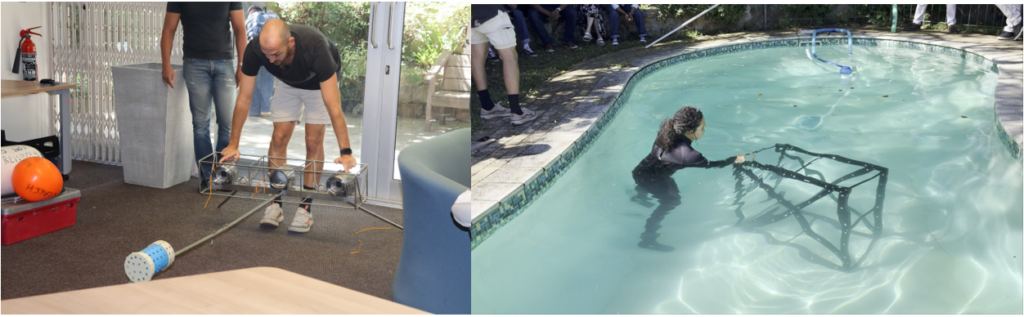
LEFT: Angus van Wyk leading a training session on equipment setup. RIGHT: Danielle Julius leading a training session on calibration.
The link between science and decision-making came through strongly across several participants of the meeting. Welly Qwabe, Marine Ecologist at Ezemvelo KZN Wildlife, said the workshop arrived at the right time, as the organisation is currently developing management plans for MPAs in KwaZulu-Natal. Welly noted that discussions around stakeholder needs, data management requirements and data governance were especially valuable, saying that addressing these areas properly “could enable the South African BRUVs network to progress further, enhancing support for policy and management.” Bruce Mann, who has been involved in BRUVs research for decades, was equally struck by the artificial intelligence progress presented at the meeting. “I was blown away by the work done by Luther Adams and Sven Kerwath on using artificial intelligence to identify individual fish species and accurately measuring all the fish appearing on the videos, not just at MaxN,” he said, adding that this work could reshape future stock assessments.
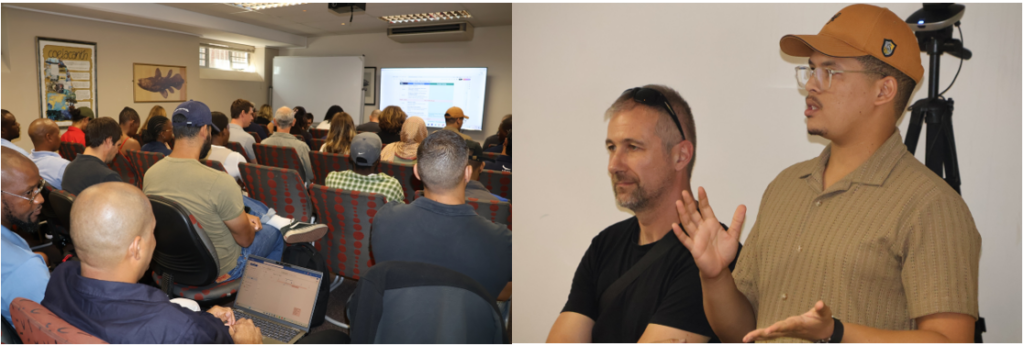
LEFT: Attendees of the SA BRUVs Network Meeting in a theory session. RIGHT: Luther Adams presenting on his work, in collaboration with Dr Sven Kerwath (beside him).
The meeting also created space for younger researchers and regional collaborators to see where they fit into the bigger picture. Master of Science (MSc) student, Tyla Goldman, said the workshop gave her insight into knowledge gaps in stereo-BRUVs research and helped blueprint project ideas for the next steps of her academic journey. Marcello Evertson, Conservation and Marine Scientist at Wild Impact, said the meeting helped strengthen a wider BRUVs community, particularly around data sharing, processing and quality control. Reflecting on artificial intelligence, he described the progress as exciting, “It’s brilliant! If we use it as tool to aid fish IDs and save time, and not as a replacement/substitute, then we have a bright future ahead of us.”
A recurring theme throughout the workshop was that standardisation is not just a technical exercise; it is what makes collaboration meaningful. As Kaylee put it, “Standardisation is really the foundation for everything else we want to achieve as a network.” When methods, metadata standards and workflows are aligned, data from different projects and regions can be combined more easily, allowing researchers to tackle questions that no single institution could answer alone. The meeting also highlighted major spatial gaps in BRUVs coverage, particularly in deeper offshore areas, and pointed toward more targeted future sampling linked to priority linefish species and fishing pressure.
Looking ahead, the workshop is expected to produce practical outputs that extend well beyond the meeting itself. These include workshop reports, a refined priority fish species list, expanded annotated datasets for AI model training, and a concept note for a centralised data repository with draft governance structures and a dashboard framework. There are also plans for an AI paper and further fieldwork under MobiFish, including a push to collect 1000 more stereo-BRUVs samples. For attendees, the momentum is encouraging, but so is the sense of shared purpose. As Aseeqah put it, “Good data sitting in a hard drive doesn’t help anyone make decisions.” The SA BRUVs Network Meeting made it clear that the real value of this work lies not only in gathering data, but in making sure it reaches the people who need it, in forms they can use, in order to guide better decisions for marine ecosystems and the communities that depend on them.