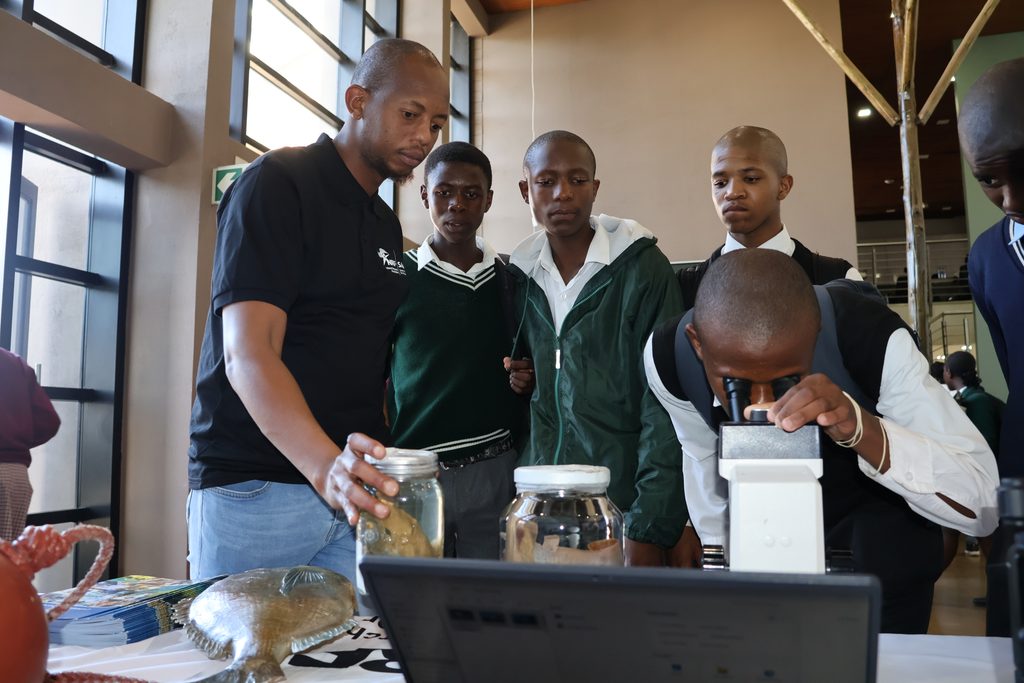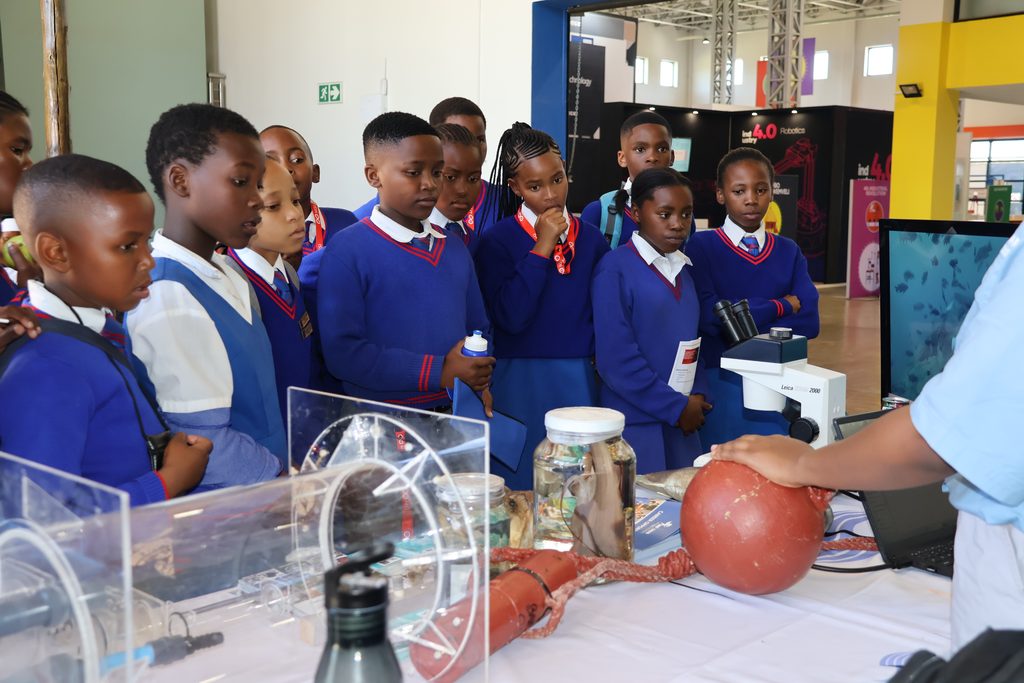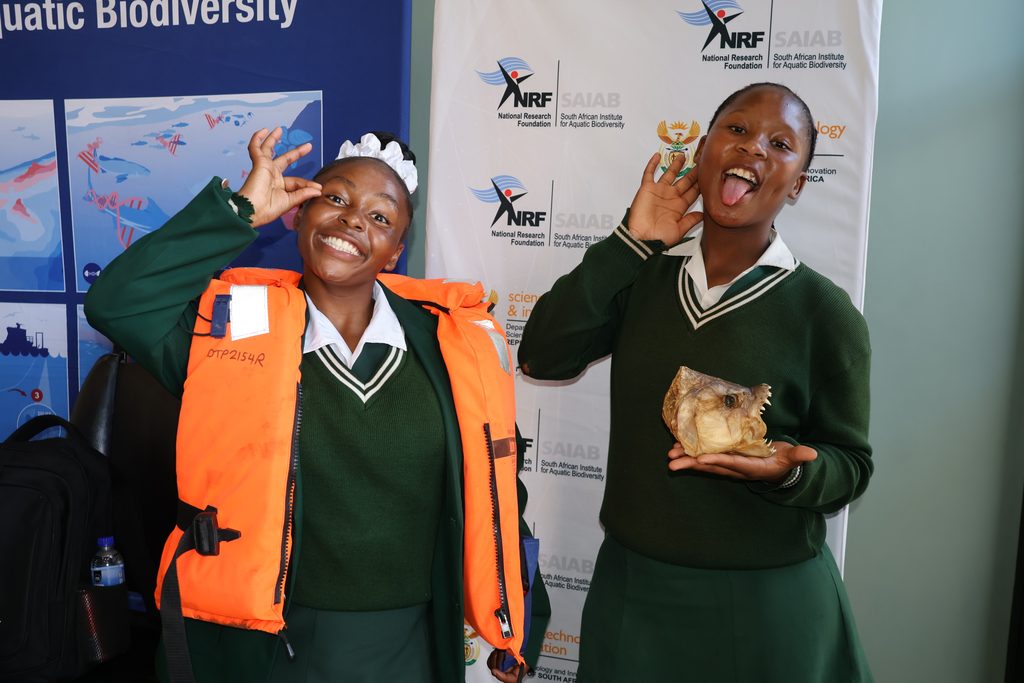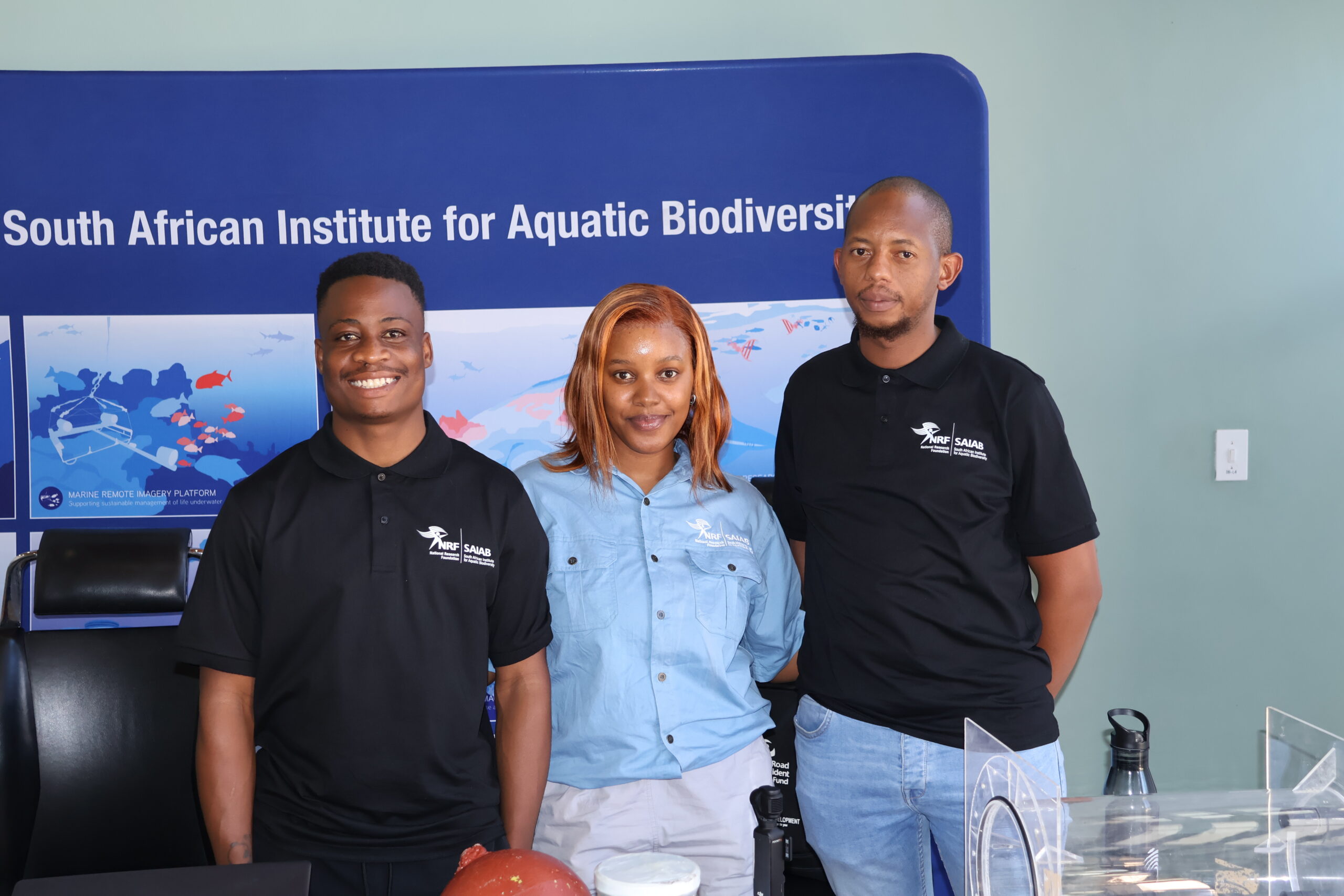
The NRF-South African Institute for Aquatic Biodiversity (NRF-SAIAB) showcased careers in aquatic biodiversity and provided learners with hands-on scientific experiences during the STEM-TUBE Career Festival held on 9 October 2026 at the Albertina Nontsikelelo Sisulu Science Centre in Cofimvaba and Cofimvaba Senior Secondary School hall in the Eastern Cape. The festival aimed to raise awareness of career opportunities in Science, Technology, Engineering and Mathematics (STEM), while encouraging learners to explore pathways into scientific fields.
Through an interactive exhibition, NRF-SAIAB introduced learners to the research conducted across its various research platforms, highlighting the diverse career opportunities available in marine and freshwater sciences. Learners also had the opportunity to use microscopes to examine fish otoliths, commonly known as ear stones, and learn how scientists determine the age of fish. Otoliths are small calcium carbonate structures found in the inner ears of fish that develop growth rings, which scientists use to estimate their age. The learners’ excitement was evident as they eagerly engaged in the activity, reflecting their curiosity and enthusiasm for hands-on scientific learning.
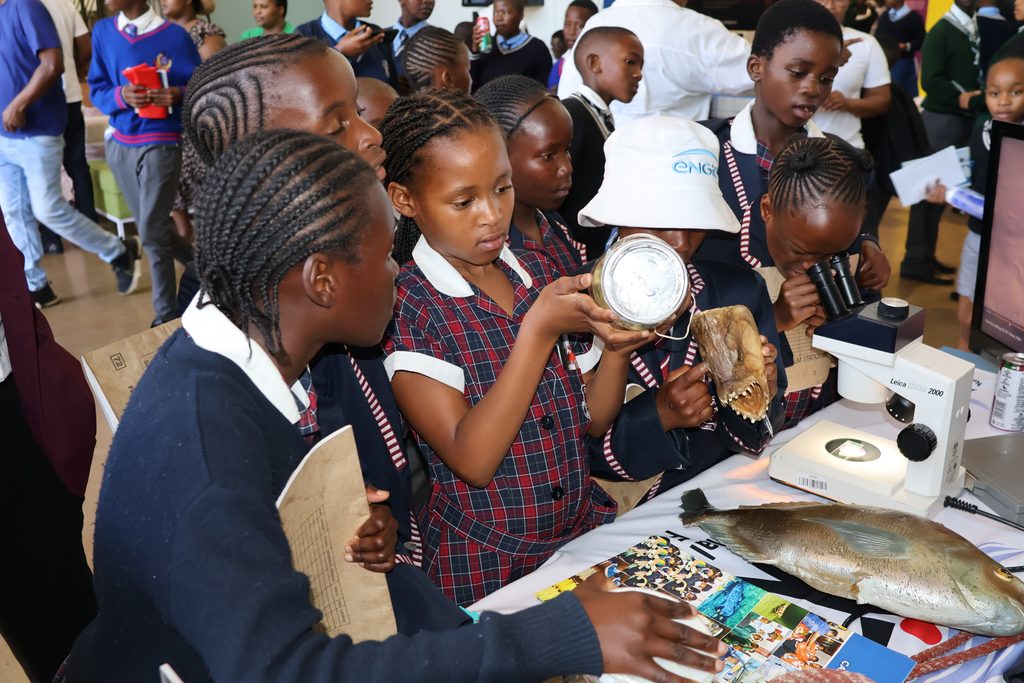
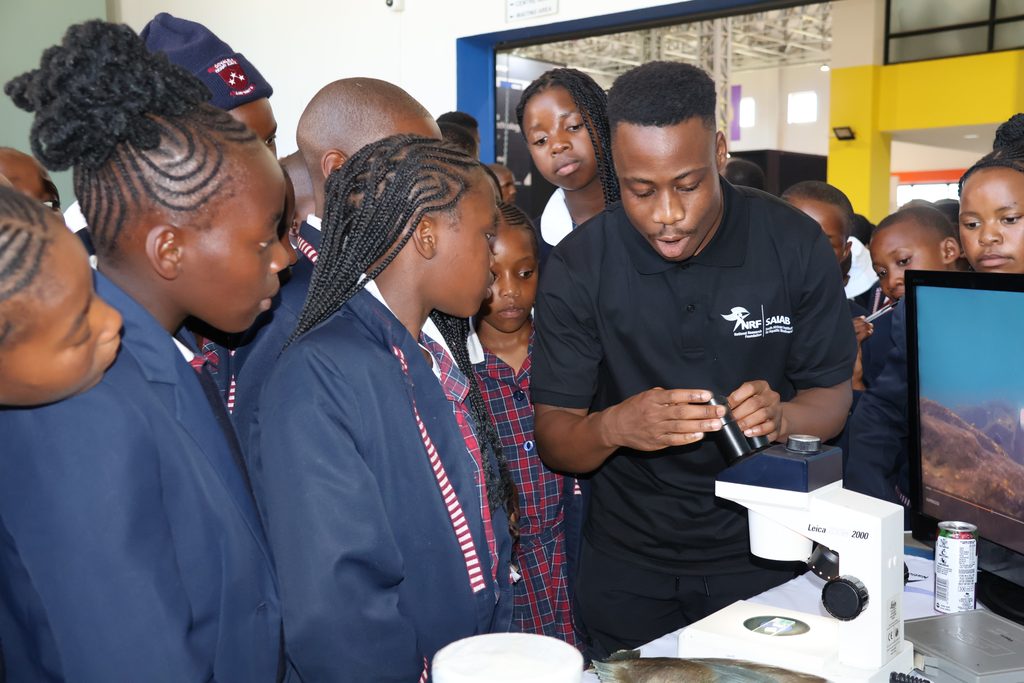
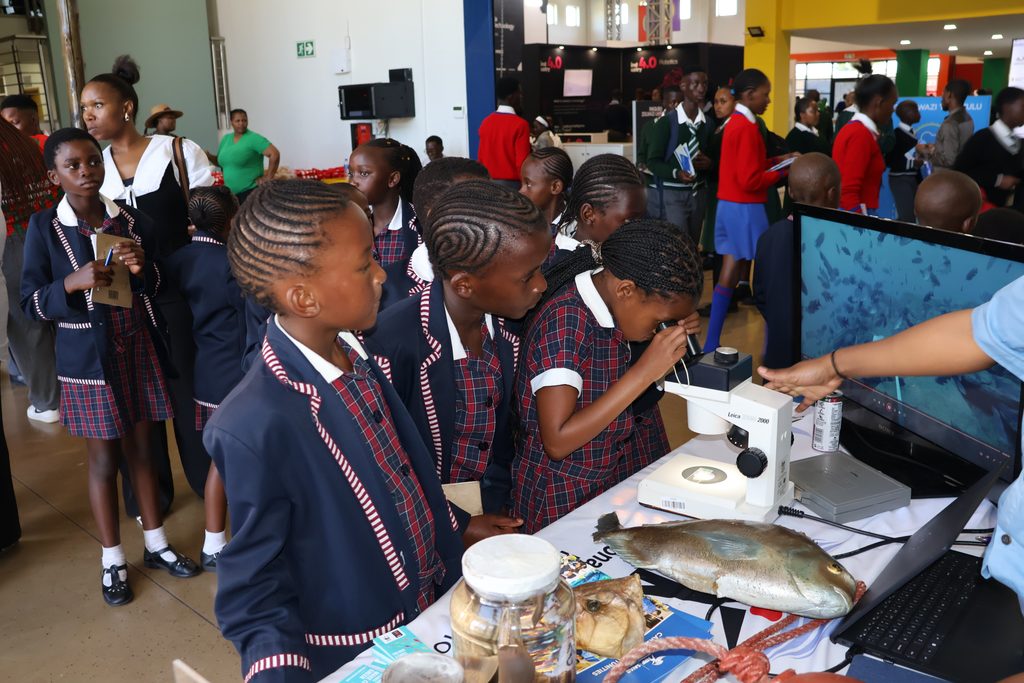
In line with the festival’s focus on addressing challenges associated with Mathematics and Science education among African learners, NRF-SAIAB engaged with learners in their preferred languages, helping to make scientific information more accessible and encouraging meaningful participation.
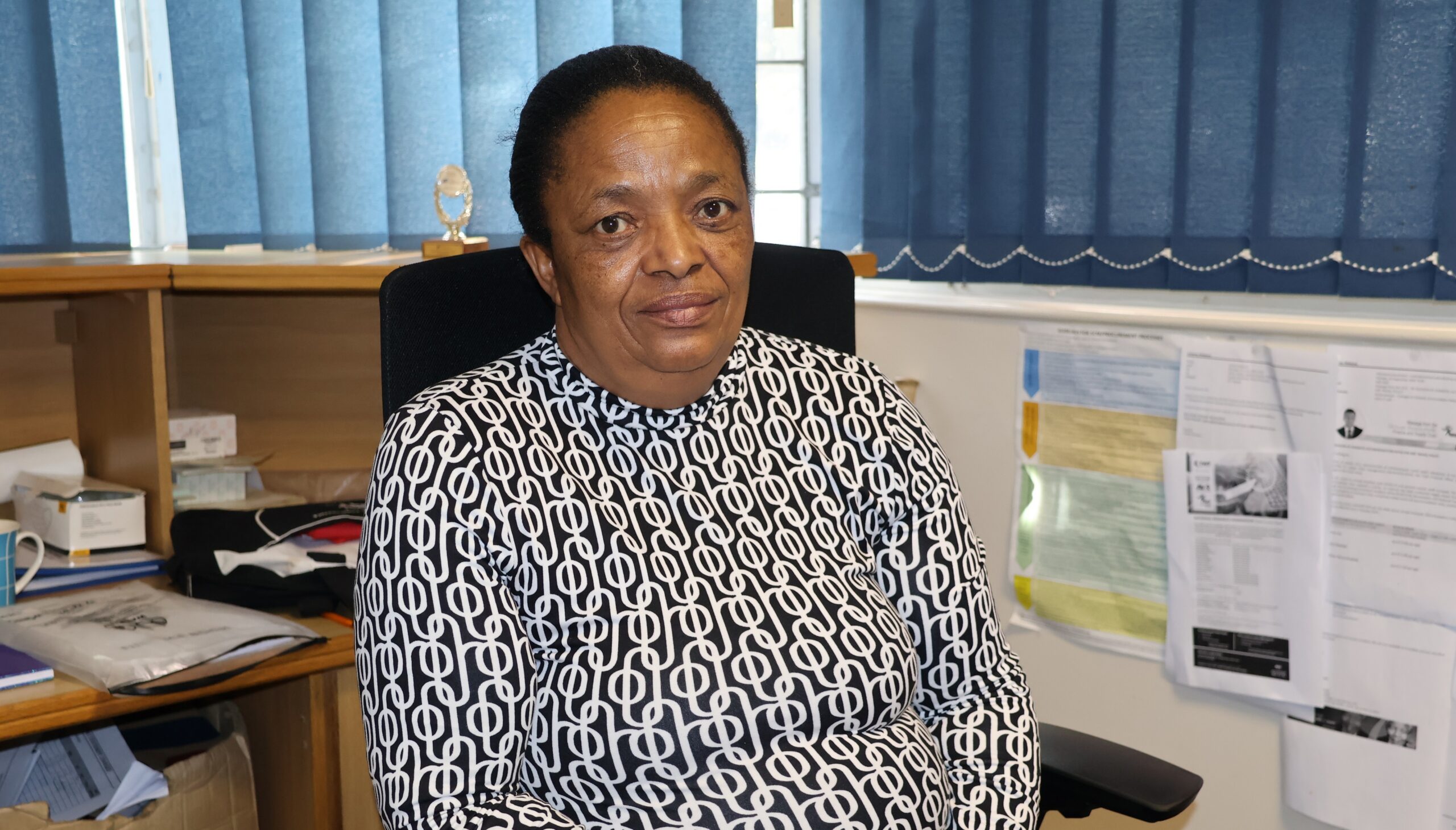
The festival began with presentations from various stakeholders, including Dr Naledi Mbude-Mehana, the Eastern Cape Department of Education’s Deputy Director-General for Transformation Programmes, who highlighted a historic shift in South Africa’s basic education sector towards strengthening mother tongue-based bilingual education. During her presentation, Dr Mbude-Mehana discussed the Department of Basic Education’s Mother Tongue-based Bilingual Education (MTbBE) programme, which aims to improve teaching, learning and assessment by recognising learners’ home languages as valuable educational resources. She emphasised that the programme seeks to address language inequalities and promote more inclusive learning opportunities for learners who speak African languages.
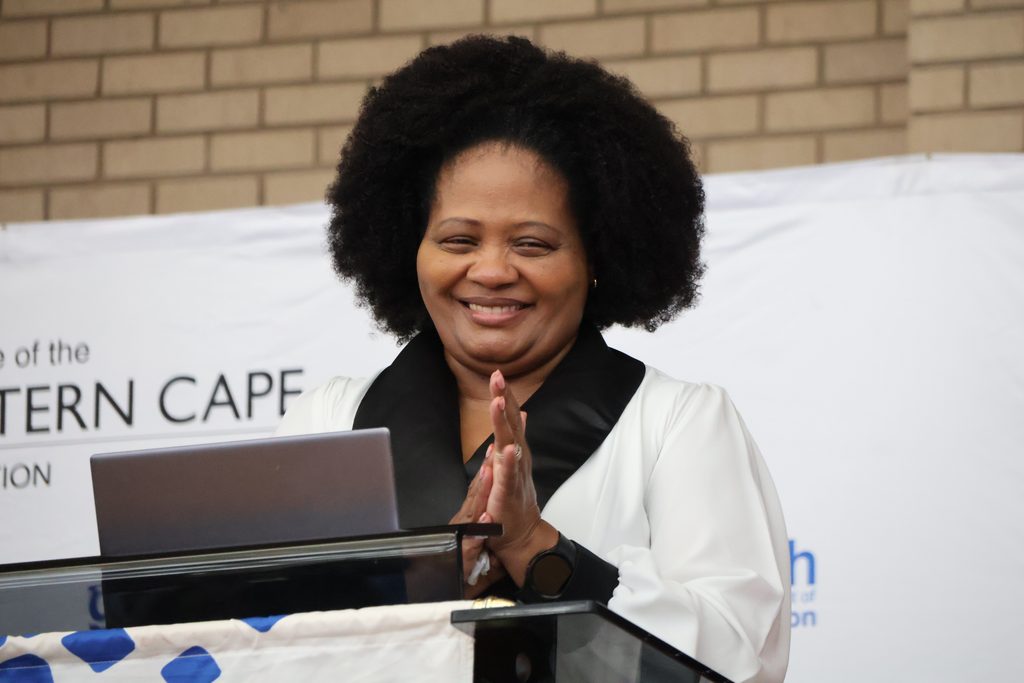
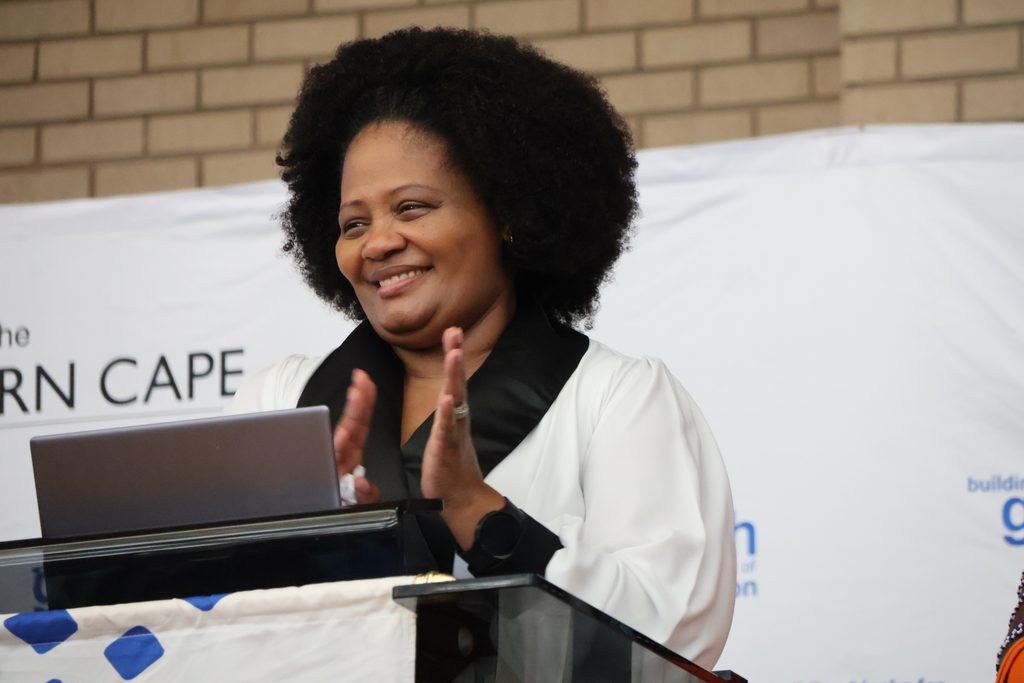
On the picture: The Eastern Cape Department of Education’s Deputy Director-General for Transformation Programmes , Dr Naledi Mbude-Mehana.
“It is not a focus on one language; it is an intentional focus on using the language resources that children bring from home to school as a basis for learning, while also learning other languages,” said Dr Mbude-Mehana. She further encouraged science communicators to support the Department’s efforts by promoting STEM awareness in languages that learners understand, particularly those from disadvantaged backgrounds. She also expressed appreciation to educators and science communicators for their continued efforts to improve access to quality education and scientific knowledge. NRF-SAIAB’s participation in the festival reflected the importance of making science accessible, relatable and engaging for young learners, while inspiring the next generation to consider careers in aquatic biodiversity and other STEM-related fields.