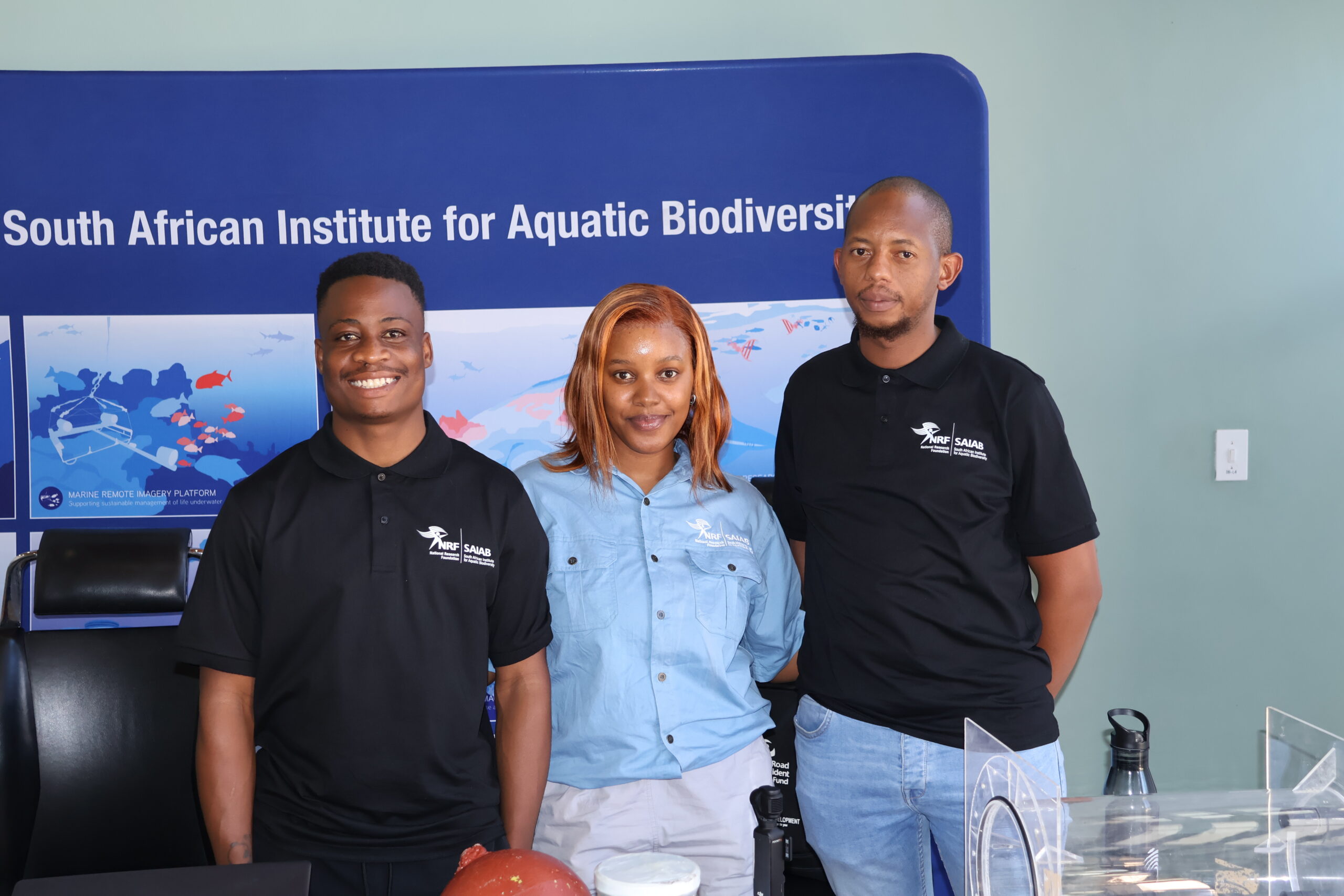
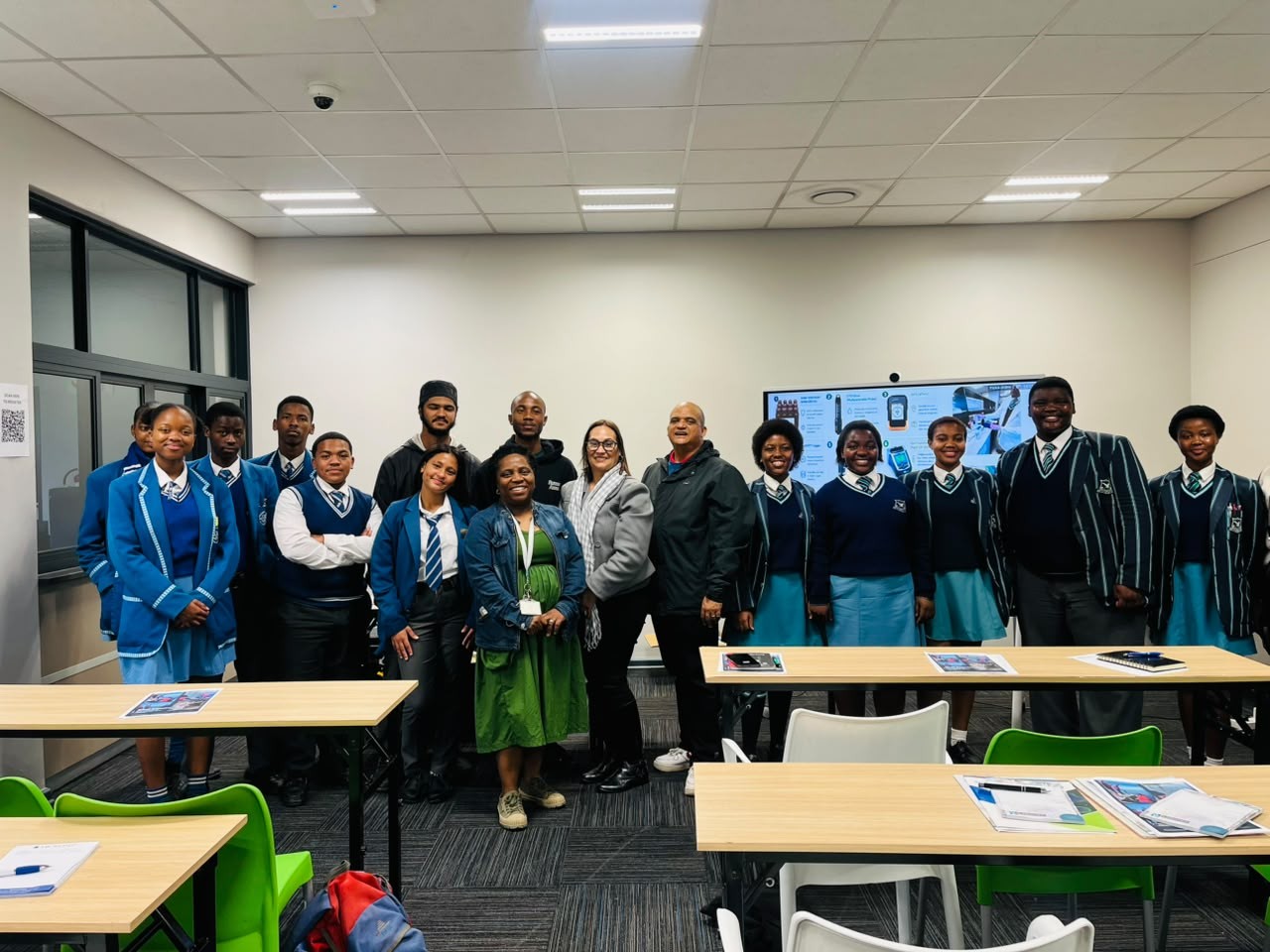
NRF-SAIAB helped bring careers in marine and freshwater science closer to hundreds of Grade 9 learners in Zwelitsha, Eastern Cape, through an engaging Career Expo that introduced young people to the diverse opportunities available within aquatic biodiversity research. The Career Expo, hosted by the Salvation Prayer Mission Worldwide, brought together an estimated 300 learners from seven high schools and provided a platform for learners to engage directly with scientists and professionals about subject choices, university applications, bursaries, internships and careers in marine science. The event was designed to help learners discover academic and career opportunities within marine and freshwater research. Representing NRF-SAIAB were members of the Communications team, Collections Officer Nonkoliso Mgibantgaka, SANBI Curation Technician Siphamandla Mceleli and PDP Post-Doctoral Research Fellow Dr Vuyo Mxo. They were joined by University of Fort Hare representatives Dr Ntombekhaya Nqumla, Sitha Ntlokwana and Anelisa Mpumza, who represented the Joint Marine Labs (JML) and ACEP Phuhlisa programmes.
Vuyo delivered a presentation highlighting the breadth of scientific disciplines within aquatic biodiversity and the career possibilities available to learners who pursue science. Her presentation formed part of the expo’s broader programme of exposing learners to pathways into marine and freshwater research, helping them understand how their current subject choices can shape future opportunities. Adding a practical dimension to the engagement, Siphamandla and Nonkoliso showcased NRF-SAIAB’s research platforms and facilities, providing learners with insight into the Institute’s programmes, research infrastructure and career opportunities that support aquatic biodiversity research. The engagement also highlighted the range of scientific work taking place beyond the classroom and the different roles that contribute to understanding and conserving aquatic biodiversity. Ntombekhaya, Sitha and Anelisa further broadened the discussion by introducing learners to the opportunities offered through the JML and ACEP Phuhlisa programmes, highlighting additional pathways for further study and development within marine and aquatic sciences.
The presentations were followed by an interactive question-and-answer session, giving learners the opportunity to engage directly with the participants and raise questions about their academic and career futures. The discussion covered subject selection, university applications, bursary opportunities, internships and career pathways in marine science. For NRF-SAIAB, the engagement provided more than an opportunity to showcase its research. It created a direct connection between young learners and the people, programmes and career pathways that make aquatic biodiversity science possible, helping to broaden their understanding of where a future in science can take them.