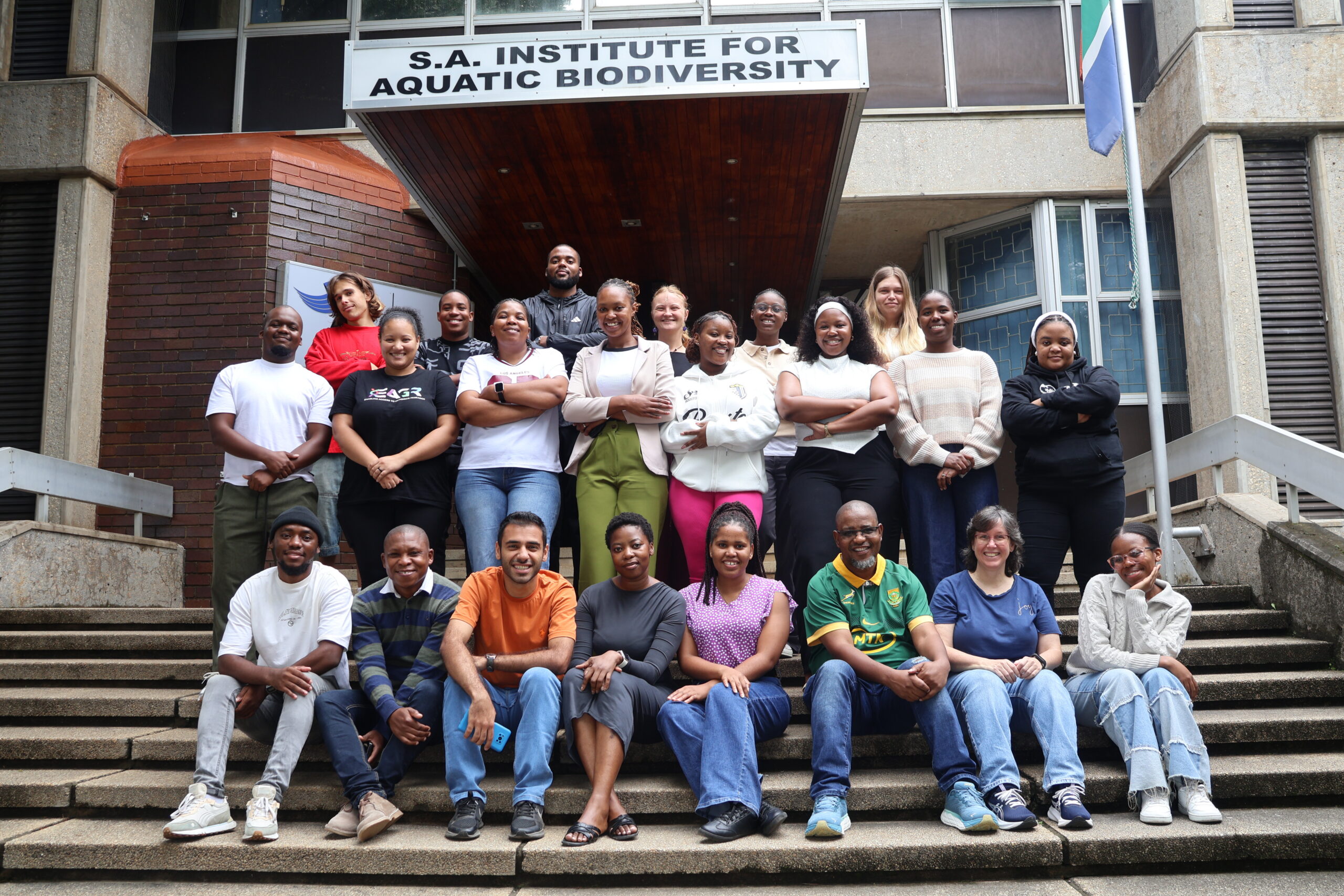
From the 2nd-6th March, the NRF-South African Institute for Aquatic Biodiversity’s (NRF-SAIAB) Aquatic Genomics Research Platform (AGRP), hosted the Fundamentals of Molecular Biology Training Workshop in Makhanda. The workshop was attended by a group of 18 researchers coming from various institutions including: Rhodes University, Walter Sisulu University, University of South Africa, University of Botswana, University of Zululand, University of Cape Town and Cape Peninsula University of Technology. The workshop, a collaborative initiative between NRF-SAIAB and DIPLOMICS, aimed to provide participants with a foundation in molecular techniques through a combination of theory lectures and hands-on laboratory training. The training covered key methods, ranging from genomic DNA extraction to PCR product purification and the analysis of barcode sequencing data.
“The goal of the workshop was to capacitate postgraduate students, researchers and scientists to conduct their own genetic analysis, while also equipping them with the necessary skills and knowledge to train others at their home institutions,” said AGRP Laboratory Technician Jody Oliver.
The workshop consisted of daily theory lectures with practical sessions covering essential molecular biology techniques to ensure participants not only understand how to perform each method, but also why each step is important. “Topics covered included DNA extraction methodologies, DNA quantification, Polymerase Chain Reaction (PCR), agarose gel electrophoresis, PCR product purification, Sanger sequencing fundamentals and barcode data analysis,” Jody added.
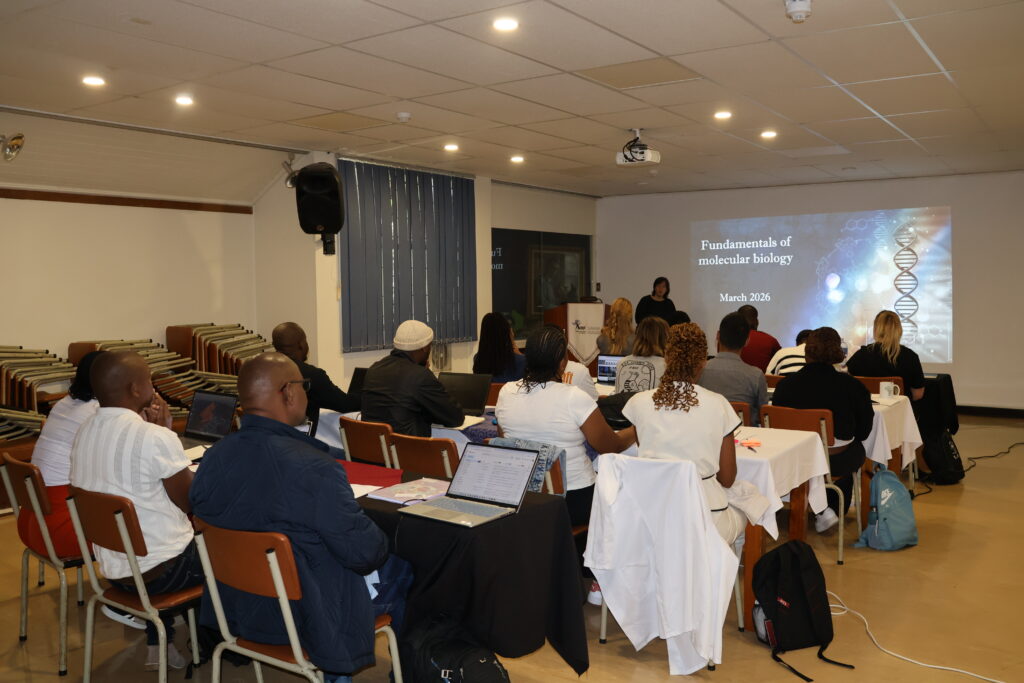
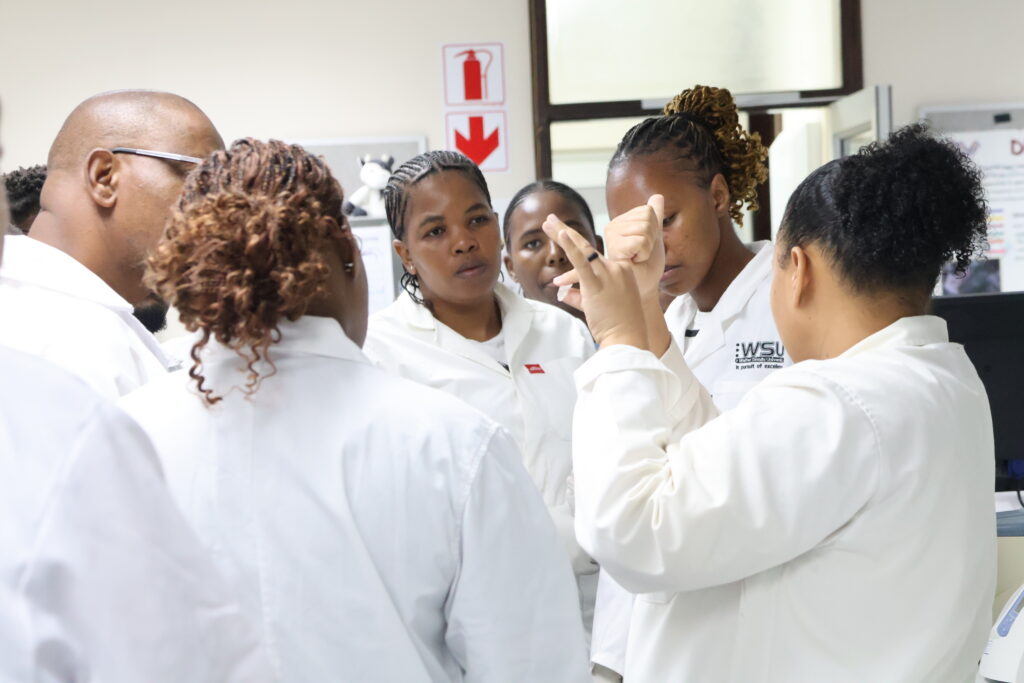
Left photo: workshop participants attending a theory session. Right photo: participants attending a practical session at the AGRP lab
Participants described the workshop as a valuable learning experience. Aphiwe Lugongolo, a PhD student from Walter Sisulu University funded by the NRF-SAIAB ACEP Phuhlisa programme, said the training provided a great opportunity to engage with experienced researchers and scientists from NRF-SAIAB. “The opportunity to work with experienced researchers and facilitators was extremely valuable. Their guidance helped simplify complex molecular biology concepts and provided practical insights into how these techniques are applied in real research settings,” said Aphiwe.
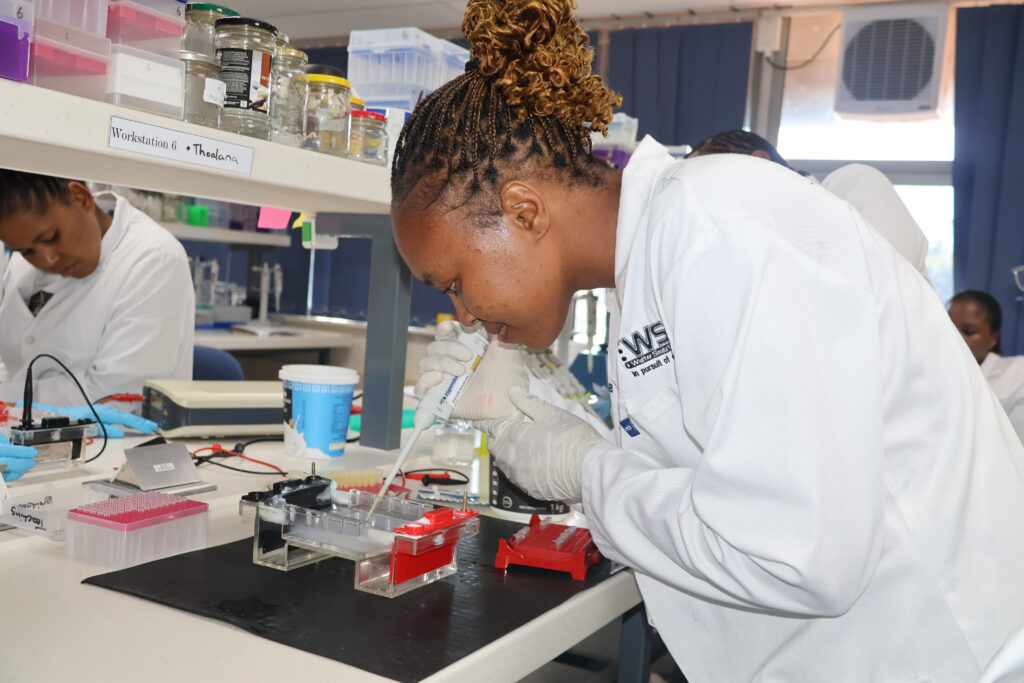
Aphiwe Lugongolo loading gel for electrophoresis
NRF-SAIAB and Rhodes University international student Amir Masoumi added that the workshop was a useful opportunity to strengthen his understanding of molecular analysis. “It was a valuable opportunity to revisit my previous understanding of molecular analysis, and to learn more about additional methods by using various techniques and equipment under the supervision of knowledgeable facilitators,” he said.
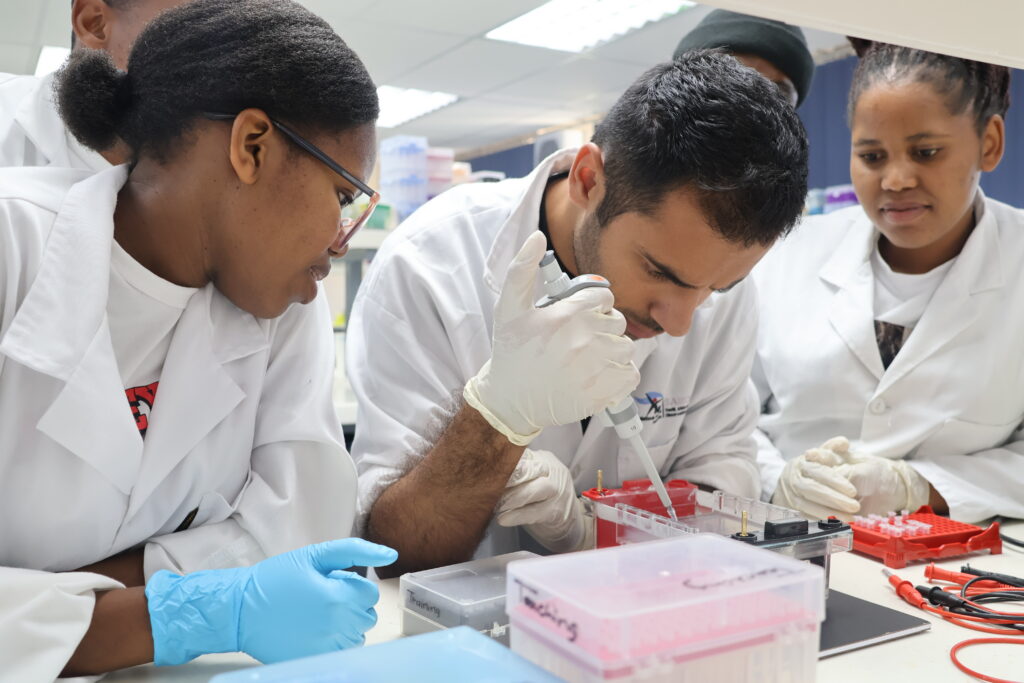
From left to right: Me-Kuthi Gogela, Amir Masoumi loading gel for electrophoresis and Florah Gaongalelwe
Nasiphi Mduzulwana, a Master’s student from Walter Sisulu University also funded by the ACEP Phuhlisa programme, described genomics research as “beautiful and interesting”, adding that the training will open opportunities for future research and publications at her institution.
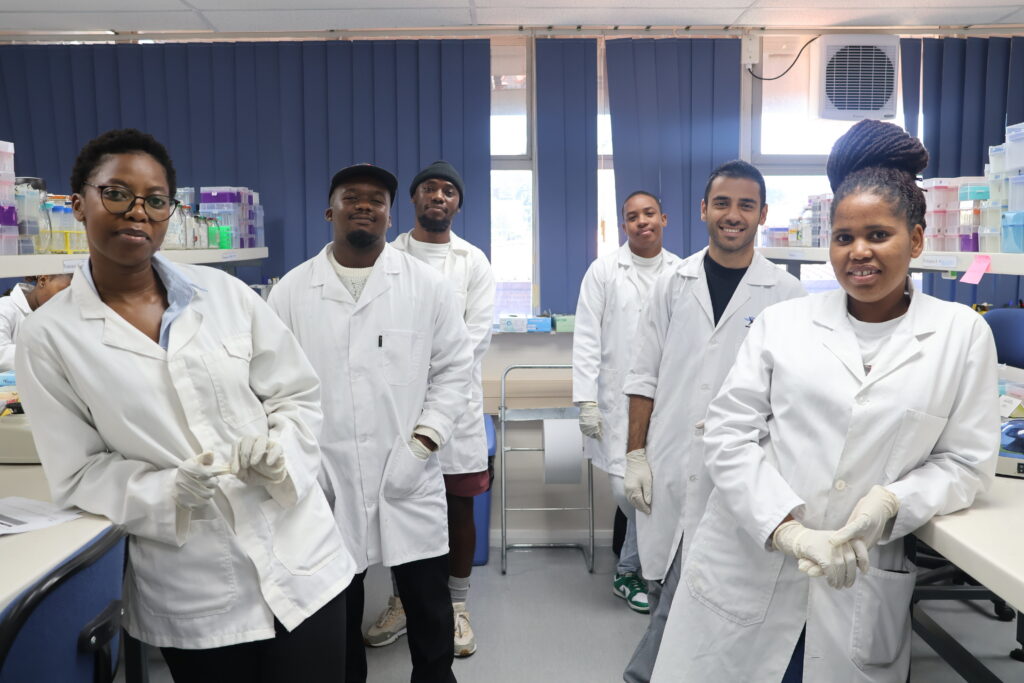
Far left Nasiphi Mduzulwana Sinovuyo Madikizela, Sibusiso Mkhabela, Mbongeni Mofokeng, Amir Masoumi, Florah Gaongalelwe (from left going clockwise)
Professor Nkululeko Nyangiwe from the University of South Africa said he also found the workshop valuable. “As the oldest in the class, I enjoyed it, especially gauging myself alongside younger students already working in molecular biology. The guidance by Jody and Gwynneth was excellent; they are very knowledgeable,” he said.
According to AGRP Platform Manager and Instrument Scientist Dr Gwynneth Matcher, the workshop contributes to capacity building in molecular biology in South Africa by equipping participants with foundational technical skills. “Increasing accessibility to training in the fundamentals of specialised genetics techniques supports genomic research output in South Africa by equipping participants with the skills to conduct molecular research at their home institutions,” said Gwynneth.