By: Thami Wanda (NRF-SAIAB Multibeam Instrument Technician)
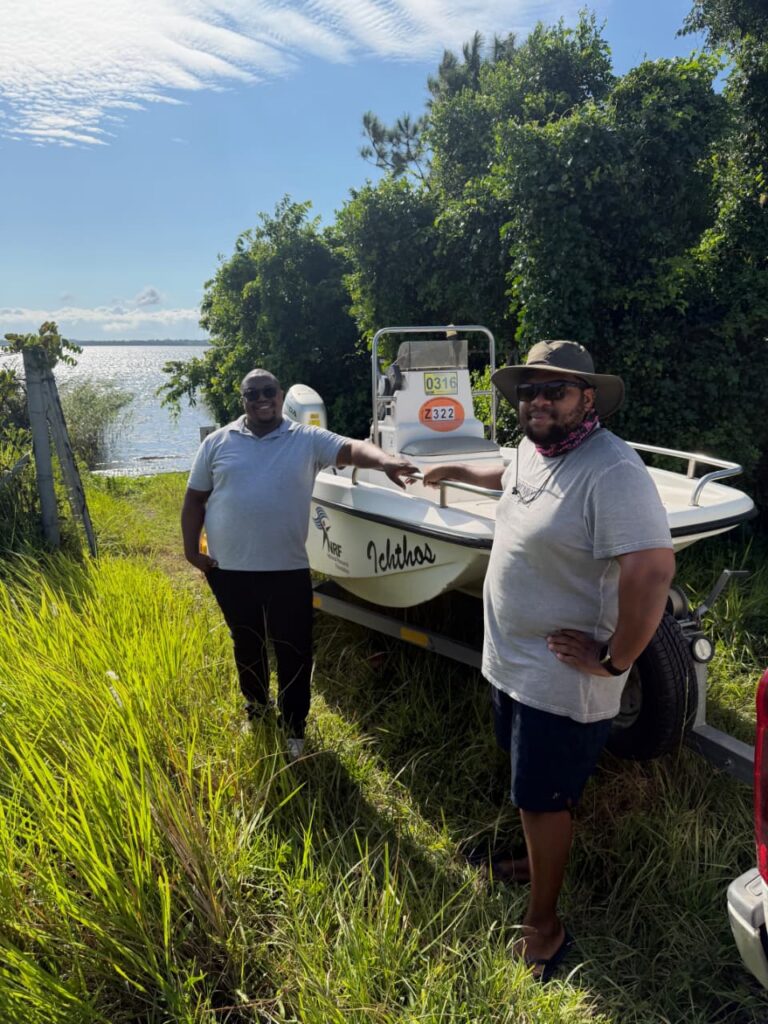
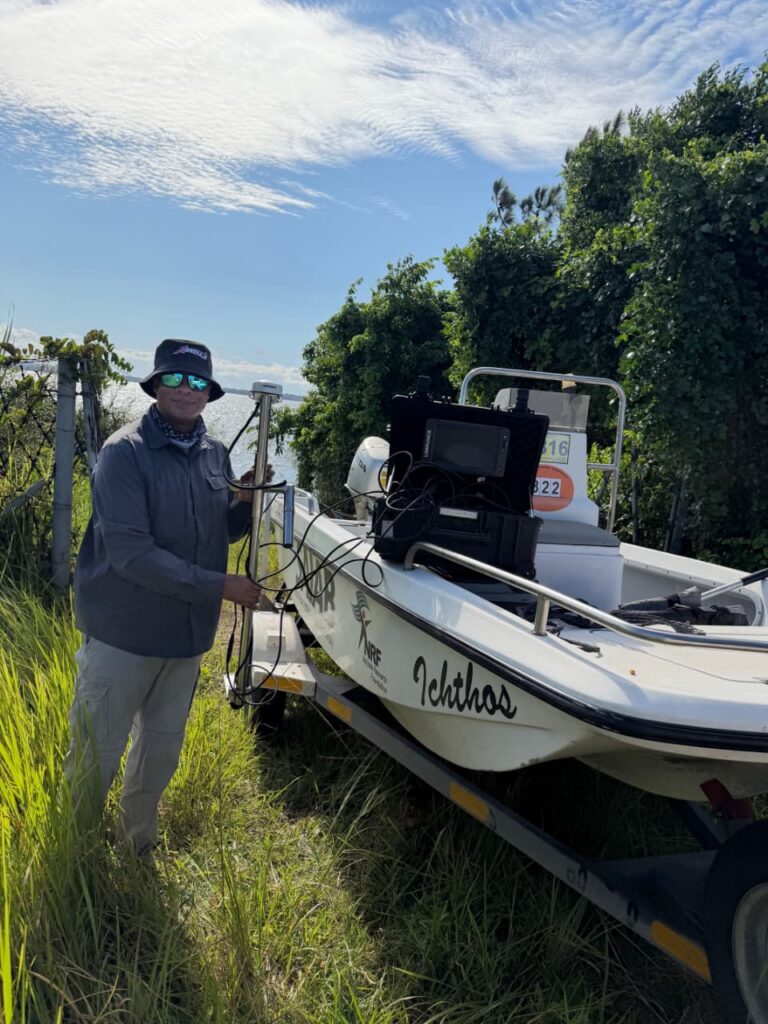
The Geophysics Mapping Platform (GeMaP) kicked off the new year by conducting bottom mapping surveys in support of a research project led by the University of Zululand, focused on understanding coastal ecosystems. As part of this project, GeMaP will be undertaking freshwater bottom surveys to better understand the characteristics of the Mzingazi Lake, located in Richards Bay.
The high-resolution maps produced from this work will show how sediment is distributed beneath the water. This information will help researchers choose the best locations to collect sediment samples during the next phase of the project. In addition, these maps can be used for long-term environmental monitoring, helping scientists track changes in underwater landforms over time (for example by comparing surveys conducted every five years or before and after major flooding events). To properly understand the ecology of bottom-dwelling animals (benthic fauna), a carefully planned sampling approach is essential. This includes selecting sampling sites that represent all the different habitat types within the Lake. Mapping the Lake-bottom is therefore a critical first step. It allows scientists to clearly see and understand what lies beneath the water’s surface from a geological perspective, revealing features that would otherwise remain hidden.
This field survey highlights the growing role of GeMaP beyond the marine environments, as it expands its work into freshwater systems. It also demonstrates how GeMaP is fostering and strengthening collaboration through NRF-SAIAB’s Joint Marine Laboratories (JML) Programme with historically disadvantaged institutions such as UNIZULU.
GeMaP aims to stay at the forefront of producing baseline maps of aquatic system bottom characteristics. These maps support multidisciplinary research and help scientists better understand how bottom habitats interact with ecosystems and aquatic biodiversity – in both marine and freshwater environments.