By: Dr Yonela Sithole (NRF-SAIAB PDP Postdoctoral Research Fellow)
At a time when taxonomy is becoming an increasingly scarce skill, the transfer of taxonomic knowledge to the next generation has become increasingly important. Many experienced taxonomists are approaching retirement age, while fewer young researchers are entering the field. Without deliberate mentorship and training, critical expertise in species identification and biodiversity documentation risks being lost.
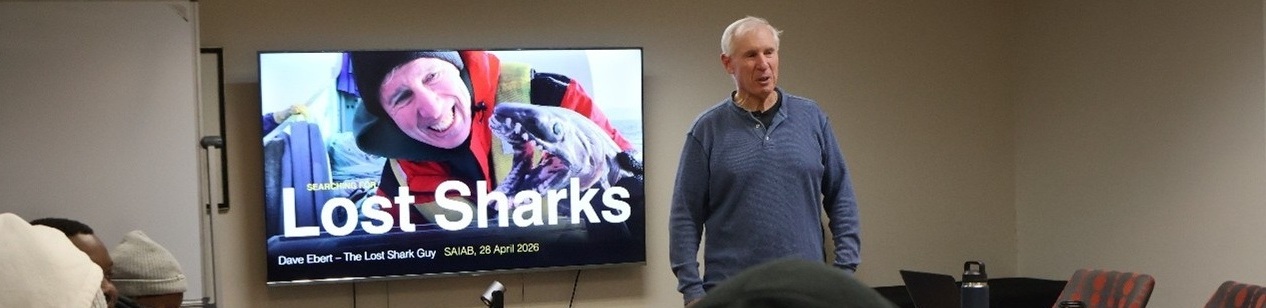
To help address this challenge, world-renowned shark taxonomist Dr David Ebert, well known as ‘LostSharksGuy’, recently visited the NRF-South African Institute for Aquatic Biodiversity (NRF-SAIAB) to train staff, students and researchers in shark identification and taxonomy. Dr Ebert is an expert on Chondrichthyes and an Honorary Research Associate at the NRF-SAIAB. He has authored several books, including Sharks of the World, published over 400 scientific papers and book chapters, and supervised numerous graduate students. He is also co-host of the podcast Beyond Jaws and founder of The Lost Shark Project, which documents and raises awareness about the world’s “lost sharks” – species that are rarely seen or poorly understood.
During his recent visit to NRF-SAIAB from 16-30 April, Dr Ebert combined research collaboration with a strong focus on mentorship and skills transfer. In the first week, he worked with several researchers on ongoing shark-related projects, including Dr Yonela Sithole (NRF-SAIAB Postdoctoral Research Fellow), Dr Michaela van Staden (Stellenbosch University Postdoctoral Research Fellow), Ms Mia Groeneveld (Stellenbosch University PhD student), Mr Rob Leslie (Department of Forestry, Fisheries and the Environment retired scientist), and Dr Bernardine Everett (Oceanographic Research Institute scientist).
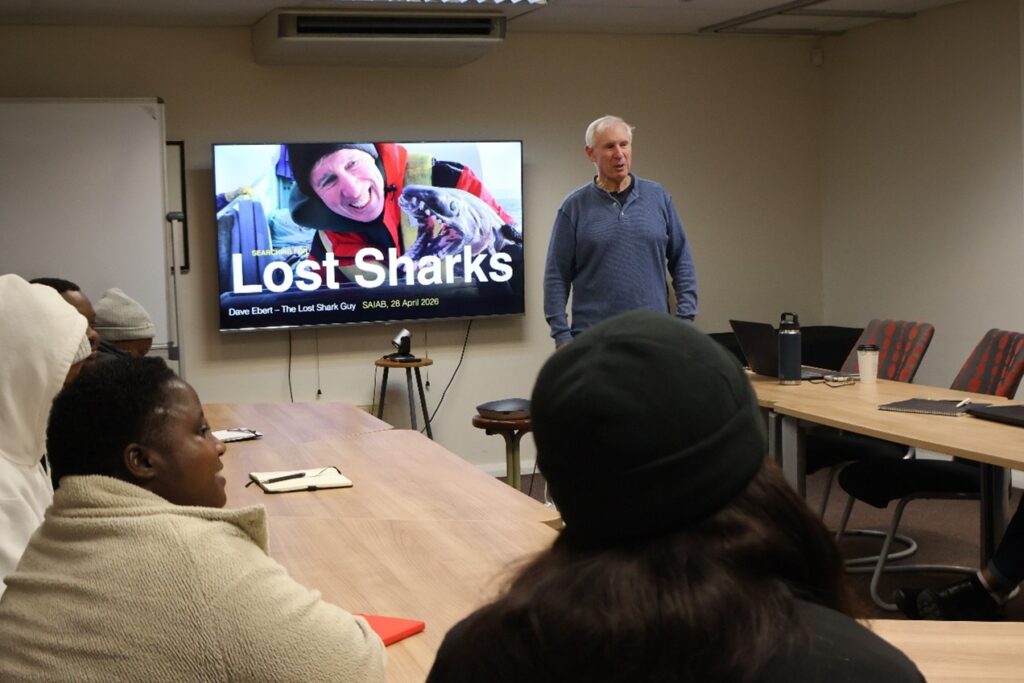
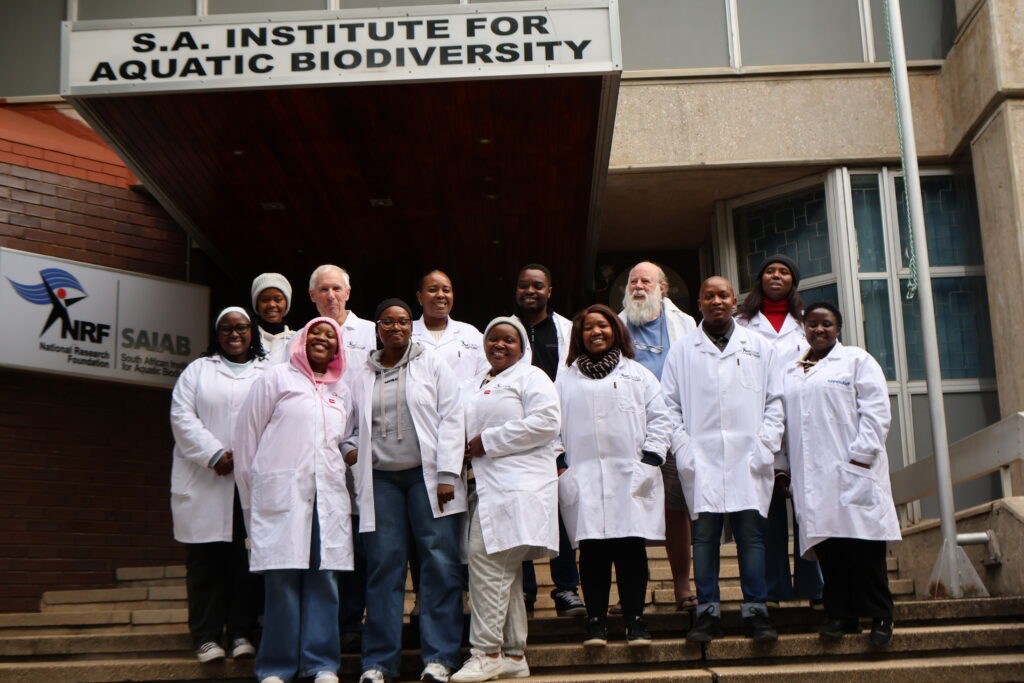
What made Dave’s visit to NRF-SAIAB this year particularly significant was a dedicated shark identification workshop that he held for 11 participants, including staff, an interns and postgraduate students. The workshop began with an introductory lecture in which Dave explained the basics of shark identification, highlighting the distinguishing features of different shark, ray and skate families. He also shared stories about the origins of species names and his experiences searching for lost shark species around the world. In addition, he emphasised the important role organisations such as Save Our Seas Foundation, Ocean Census and NRF-SAIAB play in supporting shark research and discovery.
In the Western Indian Ocean, accurate shark identification is becoming increasingly important as many chondrichthyans face growing pressure from overfishing, habitat degradation, and incidental capture in commercial and recreational fisheries. This region is recognised as a global hotspot for shark and ray diversity, yet “many species remain poorly understood, particularly deep-water species that are rarely encountered.” said Dave. Correct species identification is essential for biodiversity monitoring, fisheries management, and conservation planning, as misidentifications can lead to inaccurate records and undermine efforts to assess species distributions and population trends.
Participants described the session as highly informative and engaging, particularly appreciating the clarity of the teaching and the breadth of shark diversity covered. One MSc research student, Xiluva Mathebula, noted: “We learned about different shark and ray identification tools, diagnostic characteristics and how subtle morphological features are used to distinguish species. After attending the workshop, I learned that sharks and rays are far more diverse than I originally thought, not only in South African waters but globally as well.”
The training later moved into the NRF-SAIAB National Collections Facility, where participants examined preserved specimens and learned how to identify key diagnostic features. Participants were then given hands-on exercises using identification keys for shark and ray specimens, including specimens of some undescribed species. The activity sparked lively discussions about species discovery and naming conventions.
For many participants, the workshop provided a rare opportunity to directly engage with shark diversity in a practical setting. NRF-SAIAB Postdoctoral Research Fellow, Dr Tholoana Ntokoane, also highlighted how the course strengthened her confidence in identifying shark families and engaging with marine diversity more broadly. She said: “I found the shark identification course to be very informative. The basic concepts, highlighting the most important features that can be used to distinguish the families, gave me, as a non-expert, the confidence to distinguish between similar sharks. The practical session was great, as we got to apply the knowledge we had just gained. The diversity of sharks is amazing and ghost sharks are now my favourite.”
Importantly, the workshop also included five Collections Facility staff members responsible for processing, cataloguing and maintaining specimens. Although they are not taxonomists, the training provided valuable insight into the scientific importance of the collections they care for daily. NRF-SAIAB Collections Facility staff member and Biomaterials Officer, Amanda Gura, said: “The workshop was fantastic and very informative; it was well organised. The facilitator proved to be well informed of this field, he was very clear and also engaging. I did not know that we have so many kinds of sharks. One of the aspects I loved the most was the practical, where we got to experience what it is like to identify these sharks. I learned that it is very easy to misidentify them if you are not paying attention to detail or if you miss a key characteristic, which can lead you to a different species.”
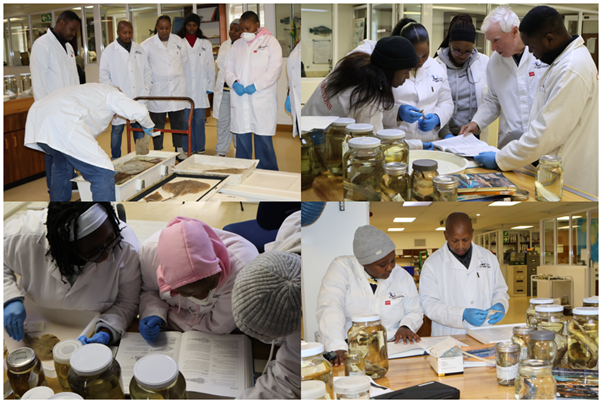
Sinoxolo Fiki, Collections Facility intern, added: “I am very happy to have been part of Dave’s shark identification workshop. I gained better knowledge of the different types of sharks and the features that distinguish one species from another. My identification skills also improved a lot, and I especially enjoyed the practical sessions where he gave us books and shark specimens to identify ourselves. Overall, I can confidently say that I now have a much better understanding of sharks than before.”
Workshops such as these are essential for ensuring that taxonomic knowledge, particularly in specialised groups such as sharks and rays, is passed on to the next generation of marine scientists before it disappears with a retiring generation of experts. As part of a broader capacity-development initiative at NRF-SAIAB, visiting Honorary Research Associates are encouraged to provide training opportunities for in-house staff, students and interns during their visits. According to NRF-SAIAB Managing Director Prof. Albert Chakona, “it is essential that we build internal capacity across all highly specialised taxonomic groups.” The shark identification workshop therefore represents not only a valuable training opportunity, but also part of a longer-term commitment to strengthening taxonomic expertise within South Africa.