In 2019, South African Institute for Aquatic Biodiversity (SAIAB) alumni Josie South and then-PhD candidate Takudzwa Madzivanzira led a baseline expedition to Zambia’s Barotse floodplain to document the spread of the invasive Australian redclaw crayfish (Cherax quadricarinatus). Two years later, in 2021, Nawa Nawa revisited the sites as part of his doctoral research to track shifts in crayfish distribution and abundance over time, as well as the socioeconomic consequences for local fishing communities. Together, these surveys established foundational evidence on invasive crayfish dynamics in large African floodplains, contributing to key peer-reviewed studies including Madzivanzira et al. (2021), Nawa et al. (2024), and Nawa et al. (2026).
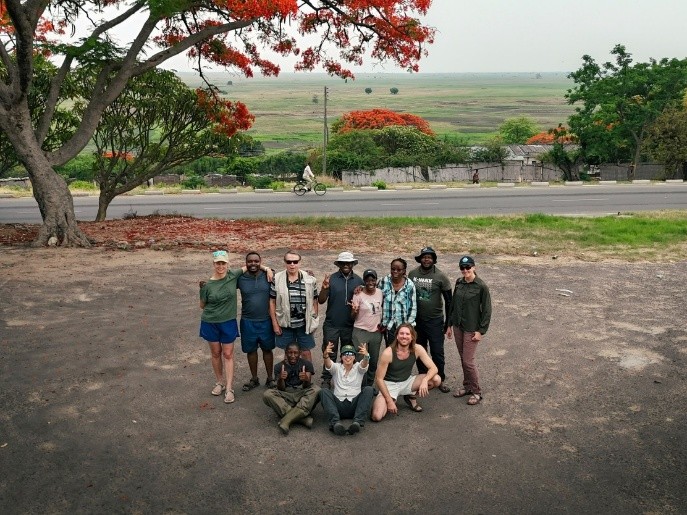
Five years after the initial expedition, an expanded, multidisciplinary team returned to the region to repeat the surveys. Researchers from the University of Leeds, SAIAB, the University of the Witwatersrand (Wits), the University of Zambia, Mulungushi University, and the University of Zimbabwe—joined by a media specialist from Ugly Sisters—deployed traps and collected stable isotope and genetic samples to evaluate ecological and community-level impacts. Bringing together early-career and established scientists across varying levels of invasion-biology experience created a collaborative environment for mentorship, knowledge exchange, and lasting partnerships aimed at practical management solutions.
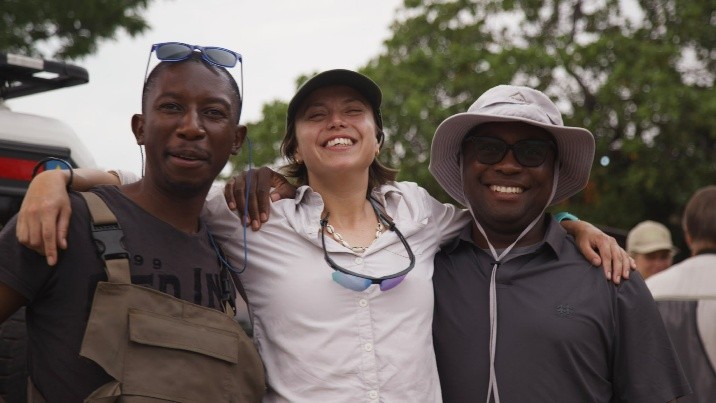
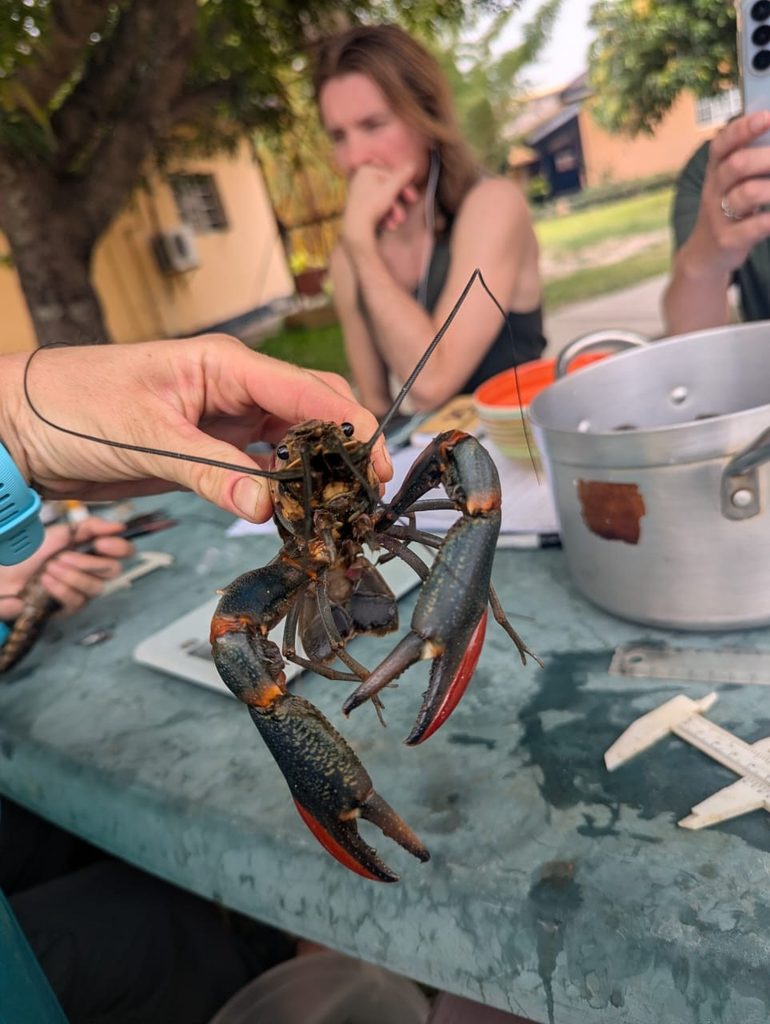
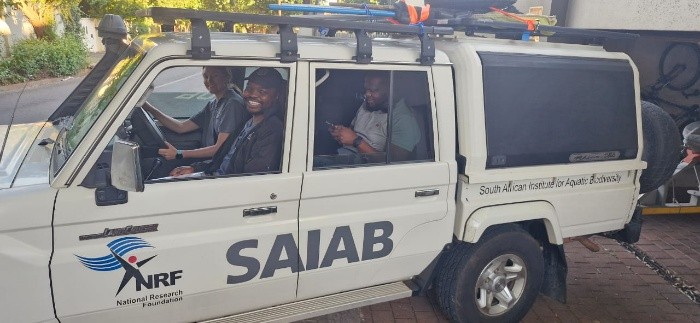
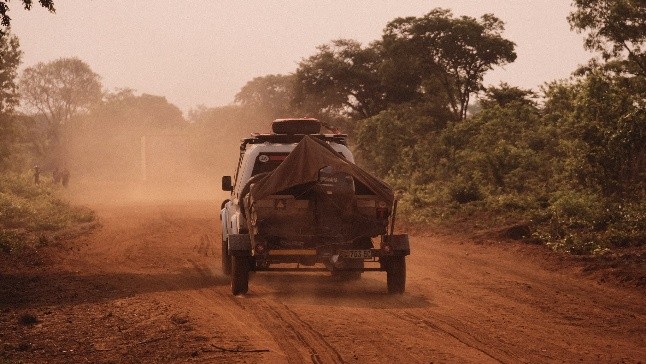
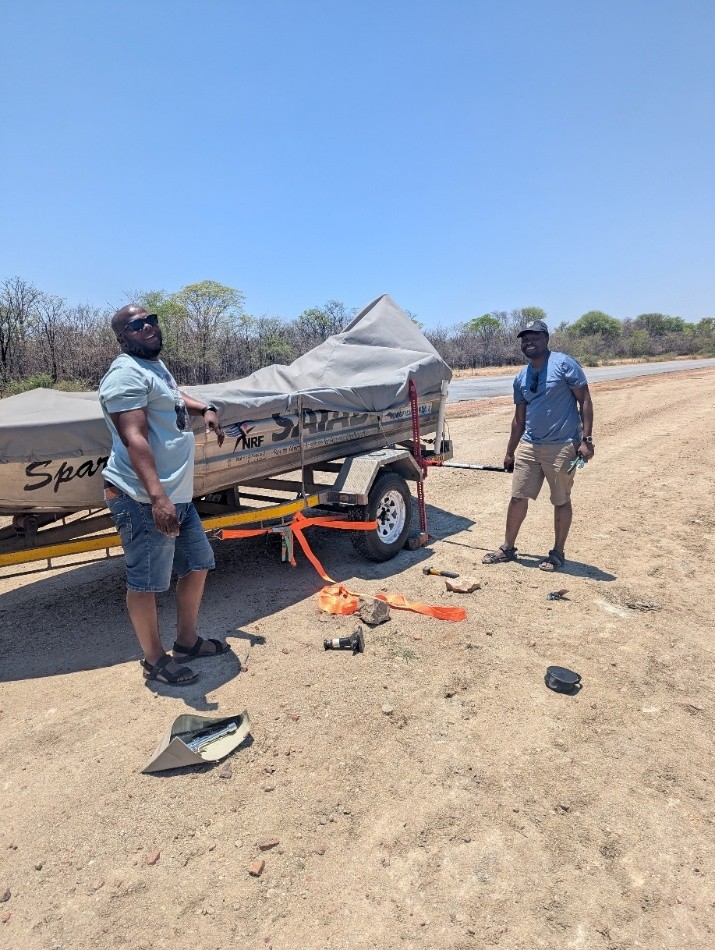
While most team members flew to Lusaka before driving to Mongu, a dedicated overland crew—SAIAB postdoctoral fellows Tadiwa Mutizwa and Megan Reid alongside Wits senior lecturer Samuel Motitsoe—drove a SAIAB Land Cruiser and towed the survey boat, Sparky, all the way from Makhanda to Mongu. Rough roads through Botswana required on-the-fly mechanical problem-solving, and weekend border crossings brought administrative delays resolved with the help of responsive staff. Once reunited in Mongu, the group spent nearly two weeks conducting intensive fieldwork, often processing trap catches late into the night.
Working alongside the Zambian Ministry of Fisheries and Livestock underscored the human stakes of biological invasions. Many local fishers already contend with poverty and climate stressors, and the ecological toll is accelerating: at one sampled site, trap catches rose 12-fold compared with 2021 despite lower trapping effort. Such rapid expansion raises urgent concern for other vulnerable ecosystems—such as South Africa’s Kruger National Park—and reinforces the need for targeted research and management frameworks.
Beyond crayfish, the team sampled fish, macroinvertebrates, and aquatic plants, generating data that help disentangle invasion impacts while advancing baseline biodiversity knowledge across the floodplain wetlands. Although post-fieldwork sample and data processing will continue for some time, the expedition strengthened international ties, supported researchers’ academic growth, and built lasting camaraderie across institutions.